Legal Assessment of an FPV Drone Attack
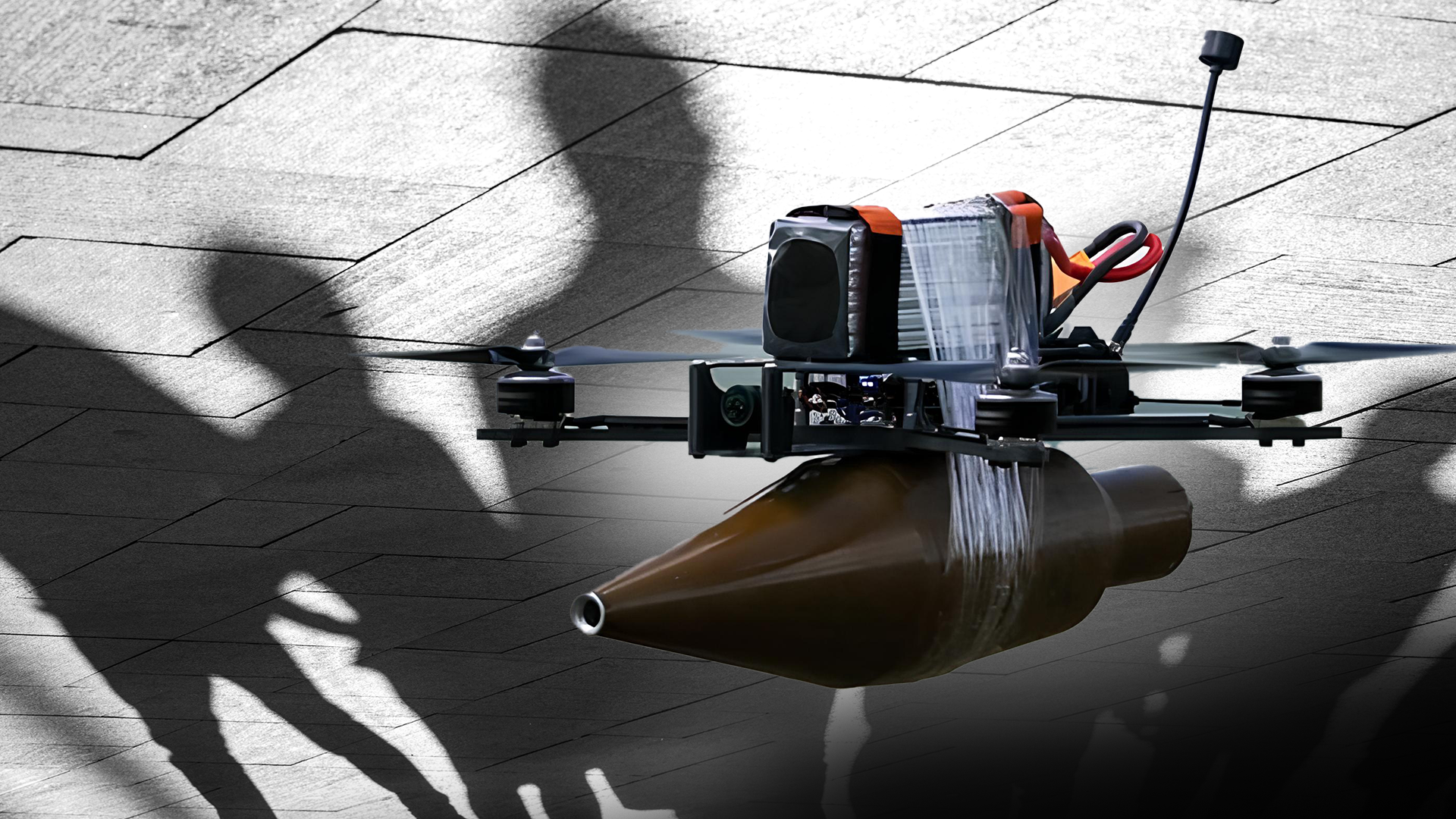
As of August 11, 2026, T4P had documented 4,137 such attacks; in 1,717 of these cases, people were killed, injured, or otherwise harmed.
When a Specific Individual Becomes the Target
On August 4, 2026, a video surfaced online showing a Russian FPV drone attacking a civilian man in Kherson. According to the National Police, the 52-year-old resident of the Mykolaiv region worked as a vendor at a local market. The published footage shows the drone pursuing the man for some time before exploding near him. The man survived. He recounted that, while being pursued, he tried to show the drone operator the vegetables he was selling to signal that he was a civilian. He said the merchandise near his vehicle was clearly visible; nevertheless, the drone did not break off the pursuit and continued toward him. Police emphasized that he had no connection to the military and that the attack itself is being documented as a war crime.
Russian sources did not deny the fact that the drone had attacked a specific individual. Instead, after the video appeared, Russian channels began justifying the attack by claiming that the vendor’s vehicle was allegedly used to transport “dual-use goods” and alleging that the man himself was linked to the Armed Forces of Ukraine. These publications offered no evidence to support such claims, yet described the strike as supposedly “selective” and directed at a “legitimate target.” Russian commentator Andrey Fedorov also attempted to justify the behavior of Russian troops by citing alleged “psychological pressure” caused by Ukrainian strikes on targets within Russia.
A similar incident occurred in Sumy just days after the attack in Kherson. On August 6, an FPV drone flew from the Pishchane district to Victory Avenue and attacked a person on a city street. A surveillance camera captured the pursuit and the strike.
The nature of such attacks is linked to how FPV drones operate. FPV stands for “First Person View.” These are small drones equipped with a camera that transmits real-time video to the operator. This lets the operator see the area ahead from the drone’s perspective, change flight direction, approach a chosen target, and adjust the drone’s movement. While FPV drones were initially used primarily in the civilian sector, the Russia-Ukraine war transformed them into a widely used tool of combat. Their use proliferated rapidly throughout 2023, and by 2024, FPV drones had become a staple of frontline warfare. Alongside the spread of this technology, the number of civilians killed or wounded in such attacks has also risen sharply.
Prosecutor General Ruslan Kravchenko reported that, since the start of Russia’s full-scale invasion, over 16,000 criminal cases have been opened regarding attacks on civilians by short-range drones. The highest number of such crimes has been recorded in the Kherson, Donetsk, Dnipropetrovsk, and Sumy regions. According to Kravchenko, nearly 7,000 people—including 179 children—have been harmed in these attacks, while 967 people, including 10 children, have lost their lives. Furthermore, as of August 11, 2026, the T4P initiative had documented 4,137 incidents classified as “FPV drone attacks.” In 1,717 of these cases, the attacks resulted in death, injury, or other harm to health.
The combination of FPV drones’ technical capabilities and the nature of these attacks raises a specific question: what exactly could the operator see while approaching the target? How much time did they have to identify it, and did they proceed with the attack even after realizing—or having the opportunity to realize—that the person before them was a civilian? Do these circumstances carry independent weight in the legal assessment of such an attack?
If the operator sees the target, does this alter the legal assessment?
When an FPV drone tracks a person for some time, the question arises: does such an attack differ, for instance, from a missile strike that kills civilians? After all, a drone operator can potentially observe the target almost until the moment of impact, monitor their behavior, and adjust the drone’s trajectory.
The fundamental rule is unambiguous: parties to an armed conflict must distinguish between military personnel and civilians, and intentionally directing attacks against the civilian population or individual civilians is prohibited. A civilian loses this protection only for the duration of their direct participation in hostilities. This principle is enshrined in Article 51 of Additional Protocol I to the Geneva Conventions and constitutes a rule of customary international humanitarian law.
Civilians may also suffer harm during a strike on a legitimate military objective. In such cases, the legal assessment will focus, inter alia, on whether the strike was indiscriminate and whether the expected civilian casualties were excessive in relation to the concrete and direct military advantage anticipated. International humanitarian law (IHL) separately prohibits deliberate attacks on civilians, as well as indiscriminate and disproportionate attacks.
Cases involving FPV drones may therefore present unique aspects. The ability to see the target does not automatically render the crime “more serious”; however, it may be relevant in establishing what the operator knew and which target was actually selected. If, for instance, video footage shows a drone pursuing a specific individual for some time and changing direction to follow them, while no obvious military objective is visible in the area, such circumstances may be significant during an investigation. Conversely, the mere presence of a camera is insufficient to automatically conclude that a deliberate attack on a civilian took place. It is necessary to establish what the operator could see, whether the individual could be identified as a civilian, whether there were grounds to consider them a military objective, what was in the vicinity, and what other circumstances preceded the strike.
Therefore, the fundamental question is not whether using an FPV drone constitutes a “more serious” violation than a missile strike. It is far more important to determine whether the drone’s technical capabilities allowed the operator to properly identify the target—specifically, to recognize their civilian status—and whether the attack proceeded despite this. If an investigation establishes that the operator had ample opportunity to realize they were facing a civilian who was not directly participating in hostilities, yet knowingly proceeded with the attack, this could be crucial in establishing that the attack was intentionally directed against a civilian. In such a case, the issue concerns not only the consequences of hostilities for the civilian population but also circumstances that may indicate a deliberate choice to target an individual protected under international humanitarian law.
Who bears responsibility for such an attack?
International criminal law is founded on the principle of individual criminal responsibility. The Rome Statute of the International Criminal Court establishes liability not only for the person who directly committed the crime but also—under certain conditions—for those who ordered, induced, or intentionally facilitated its commission.
In the event of an attack by an FPV drone, an investigation must determine who was directly piloting the drone, what information that person had about the target, what they could see before the strike, and on what grounds they proceeded with the attack. However, if it is established that other military personnel ordered the attack on a specific civilian or category of civilians, liability may also extend to those who issued the relevant orders or otherwise participated in the decision-making process. Article 25 of the Rome Statute stipulates that liability may arise, inter alia, for committing a crime, ordering its commission, inciting it, or intentionally facilitating its commission.
International law also separately provides for the liability of commanders and other superiors. For such liability to arise, specific legal criteria must be met: notably, actual control over subordinates; knowledge—or, in the case of a military commander under the Rome Statute, circumstances where they should have known—of the commission or planning of crimes; and a failure to take necessary and reasonable measures to prevent or halt the crimes or to report them to competent authorities for investigation. These principles are enshrined in Article 28 of the Rome Statute and in the norms of customary international humanitarian law.
It is reported that in June 2026, the SBU served formal notices of suspicion in absentia to ten drone operators from the 404th Territorial Defense Motorized Rifle Regiment, part of the Russian “Dnepr” troop grouping. According to the investigation, they tracked the movements of people in Kherson and directed strike drones at them; documented incidents include attacks on civilian vehicles, residential areas, ambulances, and emergency response vehicles. All ten individuals are charged with war crimes under Article 438 of the Criminal Code of Ukraine.
