International Criminal Justice: A Beautiful Myth or an Imperfect Reality?
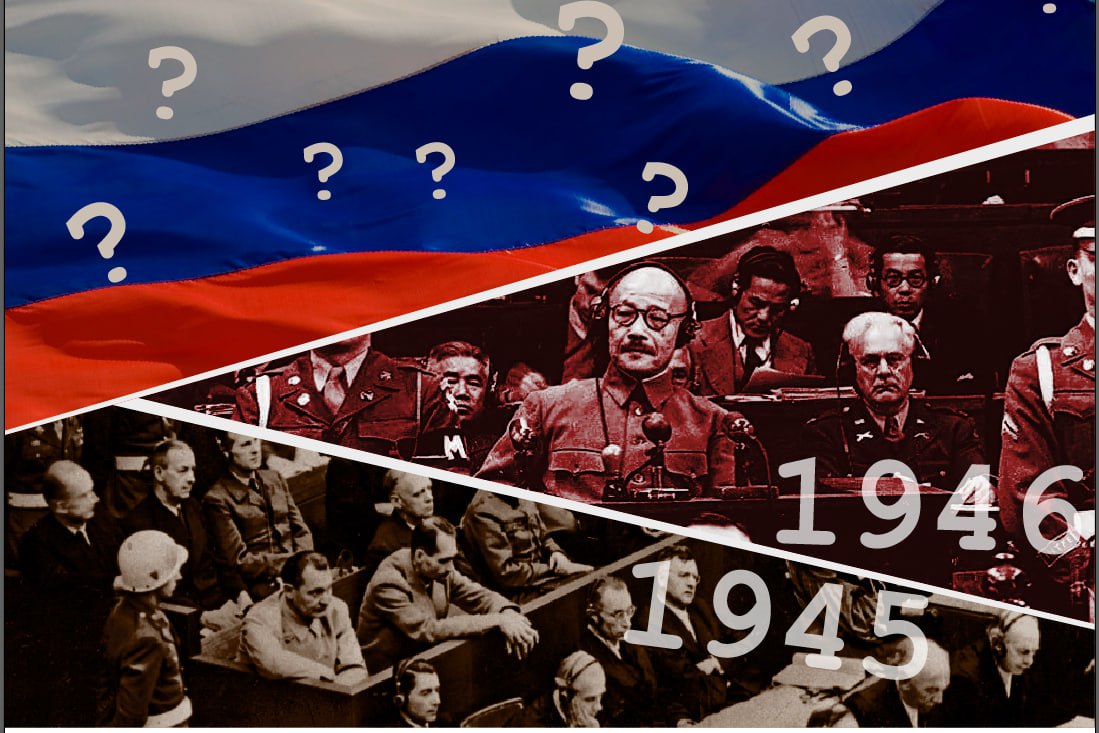
Last winter, when millions of people in Ukraine were left without power or heat amid bitter cold, the question of accountability was particularly acute.
The ongoing war is increasingly causing people to lose faith—and not without reason—in international law in general and international criminal justice in particular. I believe every reader has at least once heard or asked the question: Does international law work today?
Although the efforts of states, individual international organizations, civil society, and many others are sincerely aimed at holding aggressors accountable, significant obstacles remain. But will they be overcome?
The World Before the Twentieth Century: Pax Impunitatis (World of Impunity)
To answer the question posed above, we must first turn to history.
Before the 20th century, international criminal responsibility was a rare and unique exception, not the rule. States effectively wielded war and violence as instruments of policy and could commit any acts against their own citizens and subjects that, from a modern perspective, would be perceived as obvious crimes.
Some researchers turn to specific historical examples to see both the problems and a unique prototype of accountability.
For example, the trial of Conradin von Hohenstaufen took place in 1268. It demonstrated how justice can be used as a political tool. Although formally a trial, the situation essentially boiled down to eliminating a political rival. Later, scholars called it an example of perverted justice, serving expediency rather than law.
Another, more illustrative example of the development of the idea of international criminal liability is the 1474 trial of Peter von Hagenbach in Breisach. American lawyer and international law scholar Professor Gregory S. Gordon called this case a “landmark precedent,” noting that, despite the differences in scale, Breisach and Nuremberg share many similarities. Hagenbach, a governor appointed by the Duke of Burgundy, acted with extreme cruelty during the city’s occupation, including murders, rapes, and robberies that were shocking even by the standards of the time. After a local uprising, he was captured and brought to trial.
Significantly, the court consisted of representatives from several allied cities, including Swiss ones, which at that point were no longer part of the Holy Roman Empire. Equally crucial was the court’s rejection of the defense argument that the orders from the highest authorities were followed.
However, so-called realpolitik remained stronger than the law. The example of Napoleon I Bonaparte, who, after his defeat, was never brought to trial but was exiled to Saint Helena, vividly demonstrates this. Sovereignty and the balance of power outweighed the idea of international responsibility.
After the First World War
The First World War provided a significant impetus for attempts to create an international mechanism for accountability. The Treaty of Versailles provided for the trial of Wilhelm II for the “supreme crime against international morality.” However, the tribunal was never established. The Netherlands refused to extradite the Kaiser, and the Leipzig Trials demonstrated the lack of genuine political will to punish him.
At the same time, the Istanbul Tribunals for crimes against the Armenian population pioneered the concept of “crimes against humanity,” which was later developed; today, it remains one of the core international crimes. However, political compromises and amnesties effectively prevented the prosecution and conviction of those responsible.
Nuremberg and Tokyo: The Birth of International Criminal Justice
The events of World War II led to a breakthrough in the question of accountability for international crimes. The Nuremberg Tribunal and the subsequent International Military Tribunal for the Far East (better known as the Tokyo Tribunal) changed the general paradigm: it was no longer possible to invoke state immunity; instead, the principle of personal responsibility, particularly that of the highest political leadership of a state, became fundamental.
At the same time, these two tribunals were not without flaws. They were criticized as “victors’ justice,” and the procedural standards of the time differed significantly from those of today. For example, at the Nuremberg Tribunal, there were only four judges from the victorious countries: the USA, Great Britain, the USSR, and France. During the Tokyo Tribunal, their number was increased to eleven.
However, despite these shortcomings, the creation and conduct of these two tribunals marked, as noted above, a transition to an entirely new paradigm.
International Criminal Court
The creation of the International Criminal Court (hereinafter, the ICC) was truly a historic event. For the first time in human history, a permanent, rather than temporary, international body emerged, empowered to prosecute individuals for the most serious international crimes—the crime of aggression, genocide, crimes against humanity, and war crimes.
The Rome Statute, which serves as the basis for the ICC’s work, is also a unique document. It was the result of a complex compromise between states. Each of its provisions is the product of a political balance between the desire for universal jurisdiction and the reluctance of states to cede sovereignty, as well as the polyphony of legal systems from around the world, united in a single document.
However, the ICC also faces its own challenges. It’s easy to see that the majority of the court’s cases today concern countries with underdeveloped institutions, while its capabilities vis-à-vis major geopolitical actors are extremely limited.
This isn’t simply a matter of states’ reluctance to accept responsibility, as is often oversimplified. For example, the United States did not accede to the Rome Statute solely for political reasons. Legally, the Rome Statute sets lower standards of criminal prosecution than those provided for in the US Constitution, making ratification impossible. At the same time, raising the Rome Statute’s standards to such a high level could significantly complicate the process and make it impossible to hold certain individuals accountable.
Myth or Reality?
Based on all the above, international criminal justice cannot be considered a myth. At the same time, it cannot be claimed that it is a perfect system, as it is quite young and in its “adolescence,” with all its shortcomings and consequences.
It is the result of a rather lengthy historical evolution, undulating and nonlinear, in which law constantly competes with politics. It is limited by the sovereignty of states, depends on their cooperation, and lacks its own enforcement mechanisms. However, it is already capable of influencing individual behavior, as evidenced by the arrest warrant for Russian leader Vladimir Putin.
