The Goal — Collapse
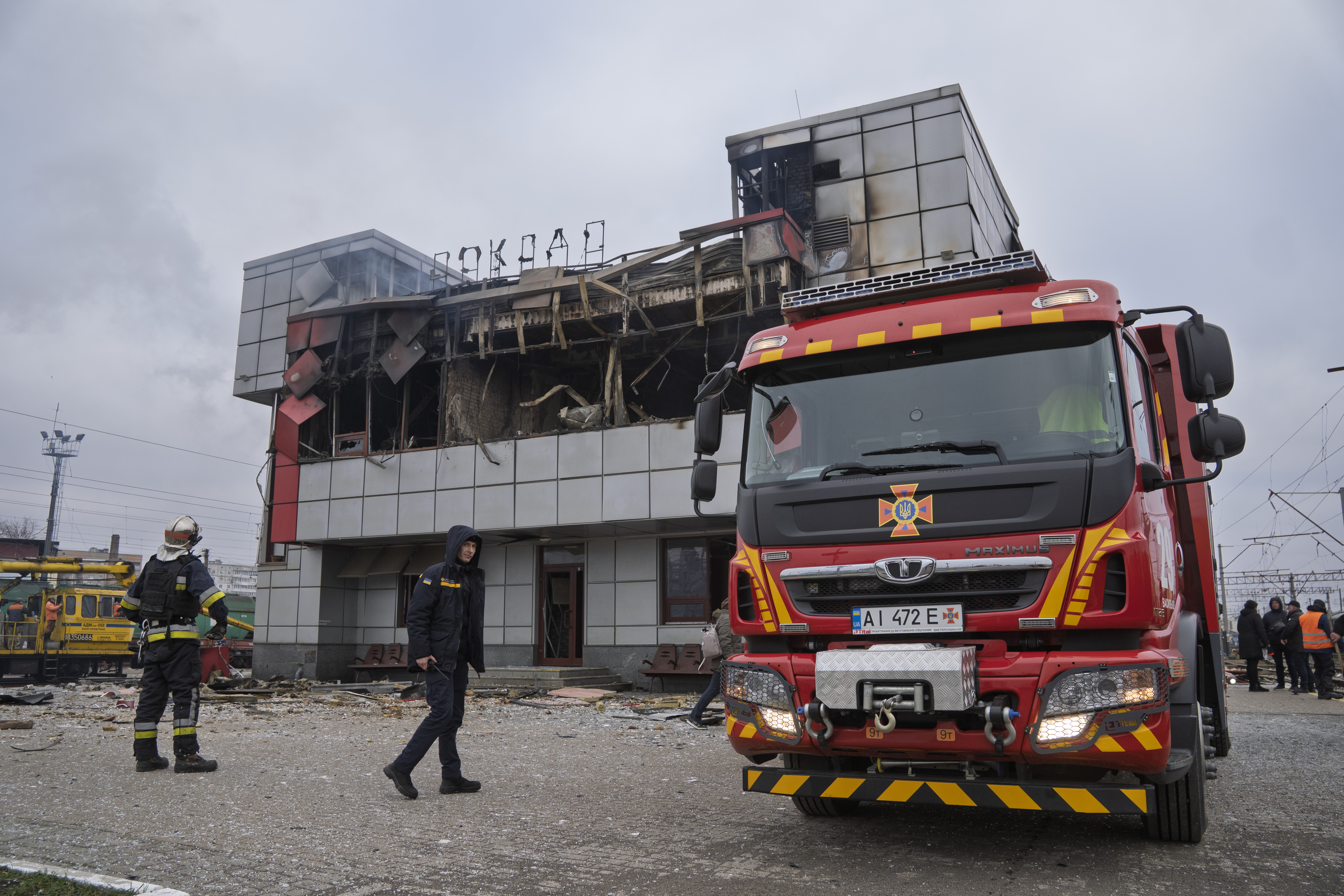
Russian attacks on the Ukrainian railway began in the very first days of the full-scale invasion and have continued throughout the war. However, it was in 2025 and the beginning of 2026 that the occupying army significantly intensified such attacks, in particular, choosing as targets civilian railway stations, depots with civilian passenger trains, and other facilities that are not related to troops or their logistics.
Since one of the key tasks of the Russians is to organize a large-scale collapse in the Ukrainian rear areas and create maximum pressure and danger for Ukrainian civilians, attacks on the railway may be part of this strategy.
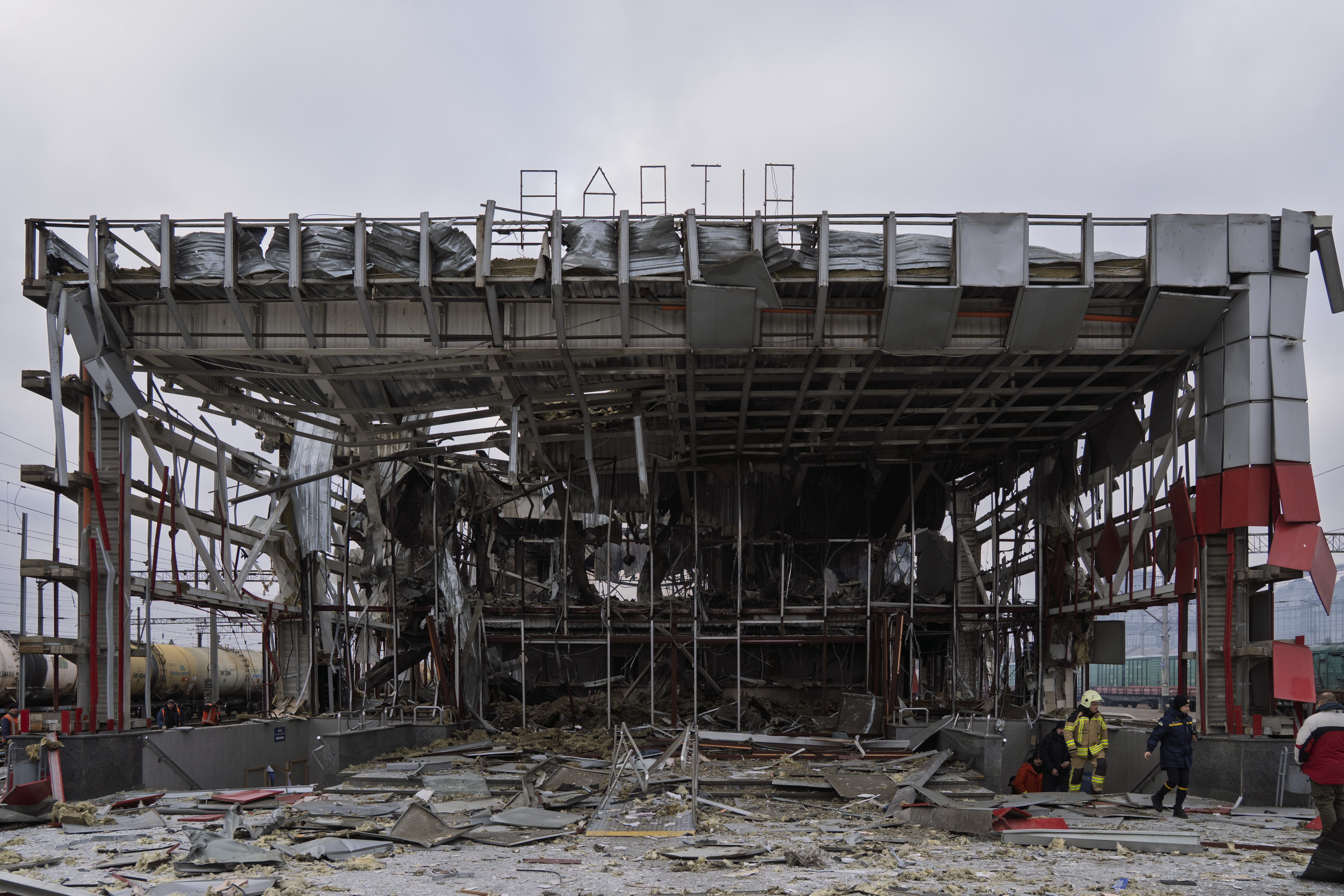
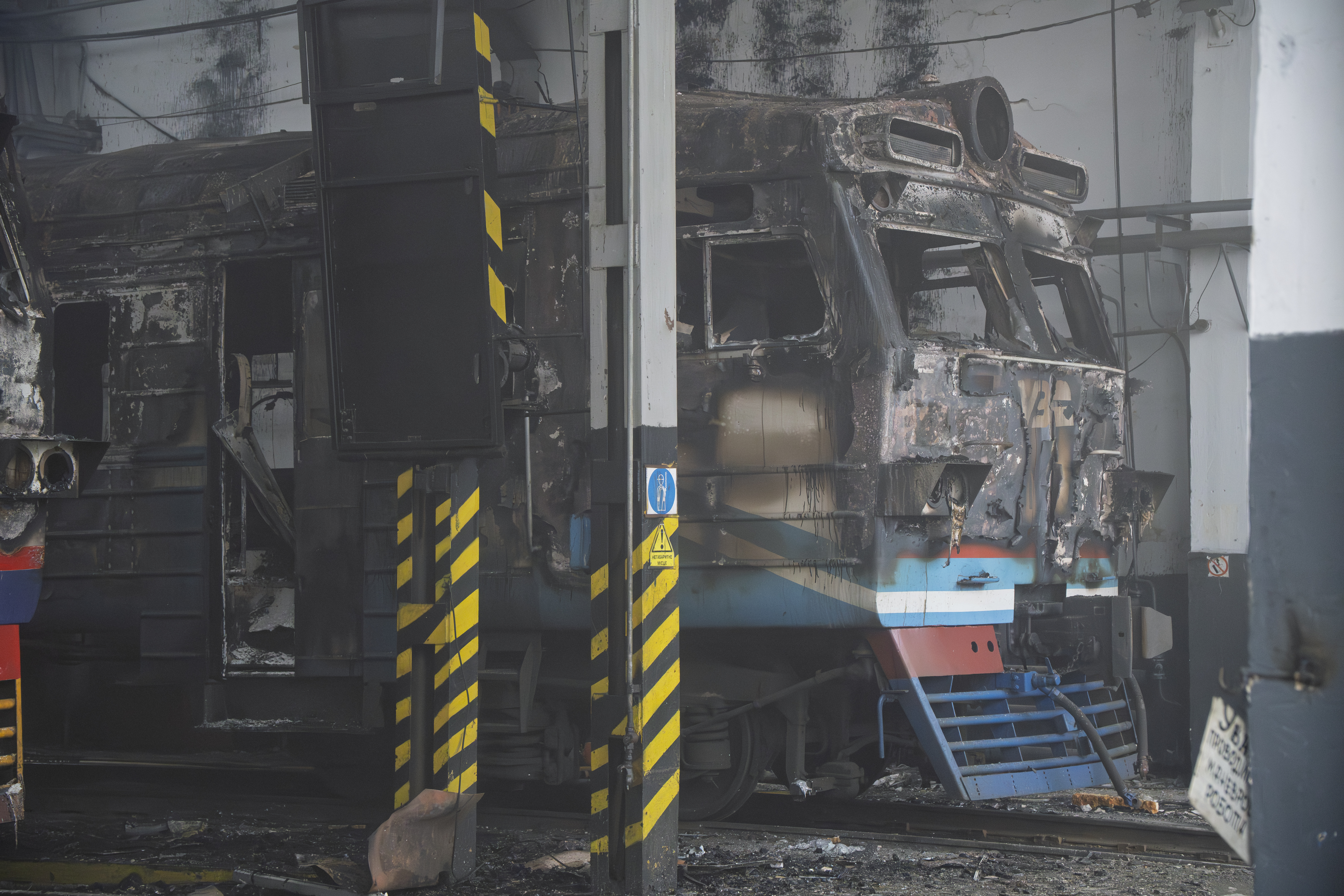
Destroyed railway station, burned electric trains, and not a single military target. Russian strike on the city of Fastiv
On the night of December 6, 2025, Russia launched a massive attack on the city of Fastiv, which is one of the largest railway hubs in the Kyiv region and in central Ukraine. Drone strikes destroyed the civilian railway station, which had no connection to military tasks and was openly operating until the moment of its destruction.
Russian propaganda justified the strike on Fastiv as an attack on a railway echelon with military equipment, which, allegedly, was destroyed in a depot near the railway station. A strike on the depot did indeed occur; however, within the first few hours, about a dozen journalists, including the author of this text, were allowed into the damaged depot. There were no signs of any military equipment, its remnants, or even transport platforms at the depot. The real “victims” of the strikes turned out to be ordinary suburban electric trains, which are incapable of carrying large cargo.
The strike on Fastiv was just another incident in a wave of Russian attacks on railway stations. According to open sources, Russia carried out at least 6 such strikes in 2025. On October 4, 2025, Russian drones hit a railway station in Shostka in the Sumy region: 1 person died, and almost 30 were injured.
Of the 6 significant strikes on railway stations, half, i.e., 3 cases, occurred in December 2025. Thus, it can be confidently stated that such attacks are not an accident, but another Russian strategy that intensified at the end of 2025. In addition, it is known that the enemy has significantly increased its attempts to destroy railway traction substations and other infrastructure that directly affect the railway’s overall operation. Open sources do not report statistics on such strikes, but it is known that there were many more of them in 2025.
Railway “kill zone”. What is known about attacks on trains, and how dangerous they are
In addition to attacks on infrastructure and railway stations, the enemy is also attacking the trains themselves. This has become especially dangerous for border and frontline regions. In the second half of 2025, there were several drone attacks on railway trains and locomotives in the Chernihiv and Sumy regions. In October 2025, the Russian unit Rubicon, known, in particular, for war crimes against the civilian population in Ukraine, published a video showing a targeted strike on a railway locomotive in the Chernihiv region, which wasn’t even carrying any cargo.
Also in October, a well-known expert on UAVs and communications, Serhii “Flash” Beskrestnov, spoke about the threat of such strikes.
“The use of Shahed drones with online control against moving targets is very limited. Predictably, railways, group transport, and large equipment are among the targets at risk. A Ukrainian Armed Forces pickup truck is not a target for a Shahed with a 50 kg warhead. The Shahed’s control system is based on a Chinese camera and a Chinese radio modem. The practical range of application is up to 200 km. Once again, for those who didn’t hear me: the main risk is our railway transport. So far, it’s within 200 km of the border, but the technology allows this to be accomplished at 400 km,” Flash commented on the enemy’s plans.
At the same time, the Russians published another video showing a strike on a train.
The situation is even more complex in the frontline regions, where civilian railway lines can be just a few dozen kilometers from enemy positions. On November 6, after several incidents involving attacks on civilian trains, railway communication with the Donetsk region was suspended. Commuter trains that still ran between cities in the Donetsk region were canceled, and the Intercity train connecting Kramatorsk and Sloviansk now has its final stop in the Kharkiv region.
In general, it can be argued that due to the development of Russian UAVs, a distance of about 20 kilometers or closer to the state border or the front line is extremely dangerous for railway traffic, but Russian Shahed-type drones, which now also have online control, are capable of striking trains at a much greater distance, including hundreds of kilometers into the rear.
The Belarusian connection. What is known about the enemy’s completely new tactics against railway traffic in Ukraine
In the last days of December 2025, the enemy launched a series of attacks on railway infrastructure and rolling stock on the Kovel-Kyiv railway section. This was reported, in particular, by the expert Serhii “Flash” mentioned earlier.
“Two days ago, Shaheds attacked a train, and then attacked a repair crew. The day before yesterday, Shaheds attacked a railway bridge, and last night a locomotive depot. All these attacks are on the Kyiv-Kovel railway line. The enemy’s task is to stop the operation of this Ukraine-Poland logistics chain. The attacks will continue. Although the Shaheds are coming from Russia, I continue to insist that they are controlled from the territory of the Republic of Belarus,” the expert reported on December 26.
The version with the “Belarusian connection” later appeared several more times. Even the president, in one of his addresses, stated that in the border zone in Belarus, antennas for guiding “Shaheds” are installed on the roofs of residential buildings. “According to our intelligence, the equipment used in the attacks against Ukraine is being placed in residential areas of Belarus near the border, including on residential buildings. In fact, antennas and other equipment that help guide Shahed drones to targets in our western regions are located on the roofs of ordinary five-story buildings. It is an absolute disregard for human lives, and Minsk must stop playing these games. We will inform our partners and prepare joint responses,” the president stated.
The Kovel-Kyiv railway line plays a crucial role in passenger transport between western and central Ukraine. Attacks like attempts to destroy railway bridges can endanger passenger trains, in particular.
Although troops can use the railway for logistics, international humanitarian law clearly establishes the principle of proportionality. Attacks on any railway facilities cannot be justified simply because these facilities could theoretically be used for logistical support of troops. The expected civilian casualties or damage to civilian infrastructure would be excessive in relation to the expected military advantage. And cases such as the attack on the railway station in Fastiv or the attack on railway transport that was not performing any military missions could be classified as a war crime.
