Voislav Torden Case
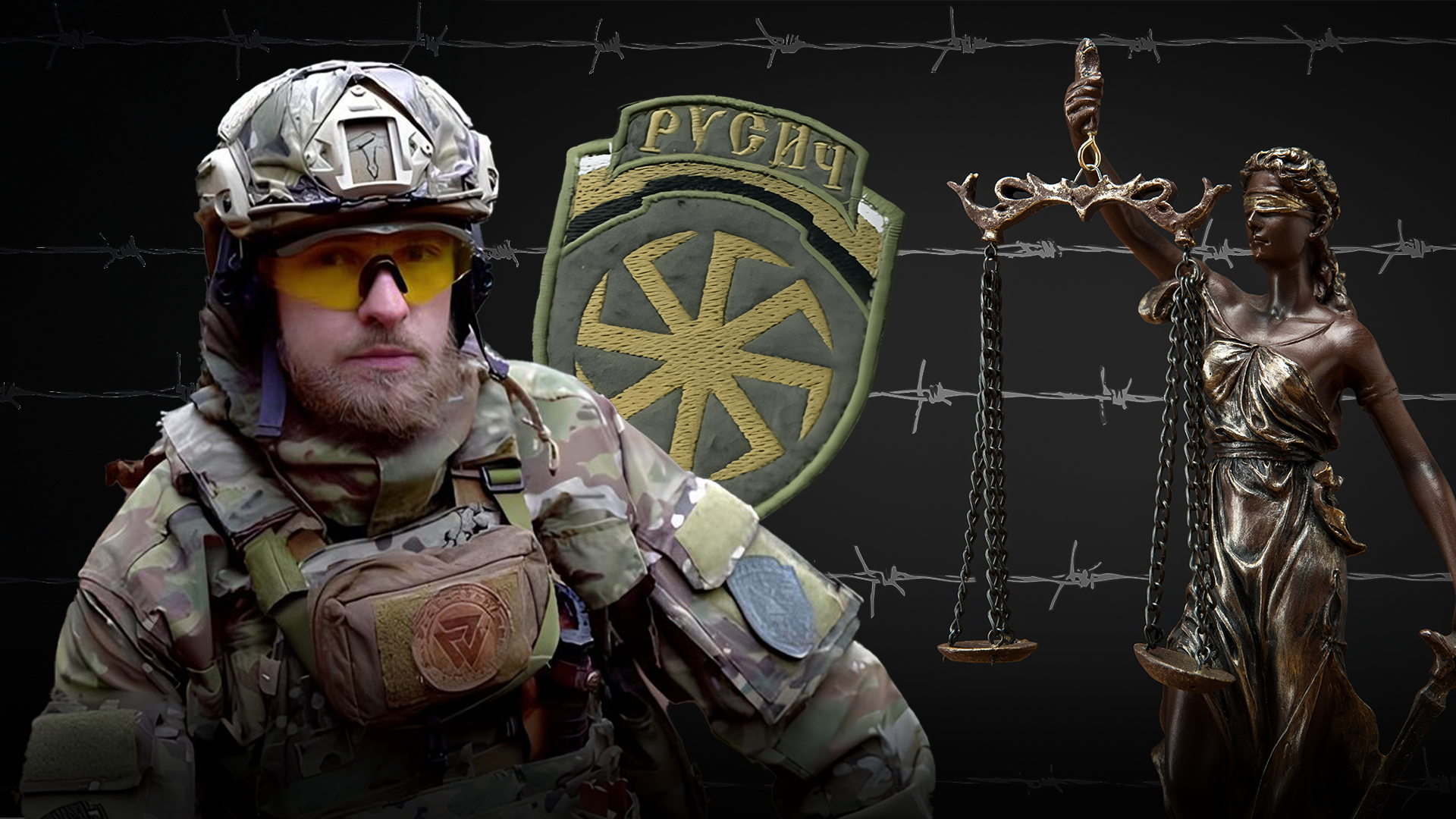
On March 14, 2025, the Helsinki District Court sentenced Russian citizen Voislav Torden (also known as Yan Petrovsky) to life imprisonment for committing a series of war crimes in September–October 2014 in the Luhansk region. The majority of these crimes stemmed from an attack by members of several Russian-controlled armed groups on a convoy of the “Aidar” Battalion near the city of Shchastia. Specifically, V. Torden was found guilty of:
a) the killing of a Ukrainian serviceman who was hors de combat. The court classified the accused’s actions under Point 1 (killing another person in connection with an international armed conflict in violation of international humanitarian law) of Section 5, Subsection 1 (War crime) of Chapter 11 (War crimes and crimes against humanity) of the Criminal Code of Finland;
b) maiming a Ukrainian serviceman who was hors de combat. The court classified these actions under Point 1 (maiming another person in connection with an international armed conflict in violation of international humanitarian law) of Section 5, Subsection 1 of Chapter 11 of the Criminal Code of Finland;
c) an act violating the human dignity of a deceased Ukrainian serviceman, which the court classified under Section 11, Chapter 5, Subsection 2 of the Criminal Code of Finland (commission of another act constituting a war crime under Article 8 of the Rome Statute of the International Criminal Court, or otherwise violating the provisions of an international treaty on war, armed conflict, or occupation binding on Finland, or generally recognized and established laws and customs of war);
d) a declaration that no quarter would be given. The court classified the accused’s actions in this regard under Section 11, Chapter 5, Subsection 1, Point 13 of the Criminal Code of Finland (declaration that no quarter would be given).
At the same time, the Helsinki District Court acquitted V. Torden of some of the charges brought against him. First, the court found it unproven that the accused had participated in an attack on a convoy of Ukrainian service members carried out by members of armed groups controlled by the Russian side using the Ukrainian flag—an act violating international humanitarian law that the prosecution had characterized as a war crime punishable under Section 11, Chapter 5, Subsection 1, Point 11 of the Criminal Code of Finland (improper use of an adversary’s flag in connection with an international armed conflict in violation of international humanitarian law).
Second, the court found V. Torden liable for the killing of only one Ukrainian serviceman—who was hors de combat following the attack—rather than four, as the prosecution had alleged.
For many reasons, the Helsinki District Court’s judgment is of significant interest regarding the criminal prosecution and punishment of those responsible for war crimes at the national level, and particularly regarding the prosecution and punishment of Russian citizens responsible for committing war crimes on the territory of Ukraine or against Ukrainian citizens. First, the judgment of the Helsinki District Court marks the first instance of Russian citizens being convicted of war crimes committed on Ukrainian territory based on the principle of universal jurisdiction. This principle holds that an individual is subject to criminal liability for a crime with which they have no direct connection—as was the case with the crimes charged against V. Torden, which were committed neither on Finnish territory, nor by a Finnish citizen, nor against Finnish citizens or national interests.
In convicting the defendant, the Finnish court explicitly cited Article 7 (“International Crime”) of Section 1 of the Finnish Criminal Code. Paragraph 1 of this article stipulates that Finnish law applies to a crime committed outside Finland if its punishability—regardless of the law of the place where it was committed—is based on an international agreement binding on Finland, or on another law or regulation that is internationally binding on Finland (an “international crime”).
At first glance, this provision appears similar to Article 8, Paragraph 1 of the Criminal Code of Ukraine. That article stipulates that foreign nationals or stateless persons who do not permanently reside in Ukraine and who commit criminal offenses outside its borders are subject to liability in Ukraine under that Code in cases provided for by international treaties—a provision generally regarded as an embodiment of universal jurisdiction in Ukrainian criminal law. However, there is a significant difference between Section 1, Article 7 of the Finnish Criminal Code and Article 8, Part 1 of the Ukrainian Criminal Code: the former provision includes a second sentence stating that additional provisions regarding the application of the article are to be established by Decree. In 1996, the Finnish Ministry of Justice issued Decree No. 627/1996 on the Application of Section 1, Article 7 of the Criminal Code, which sets out an exhaustive list of the types of crimes considered international for the purposes of Section 1, Article 7 of the Finnish Criminal Code.
Among other things, the Decree lists war crimes (Article 1(1)). Thus, despite its apparent strong resemblance to Article 8, Part 1 of the Ukrainian Criminal Code, Section 1, Article 7 of the Finnish Criminal Code is, in reality, a much clearer and more specific provision. Furthermore, the wording “a crime the punishability of which... is based on an international agreement” leaves significantly less room for divergent interpretations than the phrase “in cases provided for by international treaties.”
Secondly, the judgment of the Helsinki District Court is notable for its numerous references to provisions of international law and for a dedicated section of the reasoning addressing the specific question of which norms of international law apply to the case of V. Torden. The aforementioned provisions of the Finnish Criminal Code criminalize war crimes using a combined approach: (a) by listing specific types of war crimes in a “catalogue” (Section 11, § 5, Part 1 of the Finnish Criminal Code); and (b) by means of a blanket reference to norms of international law (Section 11, § 5, Part 2 of the Finnish Criminal Code). This approach is somewhat reminiscent of Article 438 of the Criminal Code of Ukraine, which also explicitly criminalizes specific types of war crimes (such as the ill-treatment of prisoners of war or the civilian population) but concludes with a blanket reference to norms of international law (other violations of the laws and customs of war provided for in international treaties to which the Verkhovna Rada of Ukraine has consented to be bound). When applying Section 11, Chapter 5, Subsection 1 of the Finnish Criminal Code—although the provision specifically defines the prohibited conduct—the Helsinki District Court nonetheless legally classified the accused’s actions in light of international law norms. This mirrors the trends observed in how Ukrainian courts apply the “catalog” portion of Article 438 of the Criminal Code of Ukraine; it serves as further confirmation that when national courts apply domestic criminal law provisions regarding war crimes, they inevitably apply norms of international criminal law on a subsidiary basis, even when the domestic statutory provisions are drafted with the utmost specificity.
As for Section 11, Chapter 5, Subsection 2 of the Finnish Criminal Code, it is notable not only for its resemblance to Article 438, Part 1 of the Criminal Code of Ukraine but also for a clear distinction: whereas Article 438, Part 1—in criminalizing war crimes—refers to violations of the laws and customs of war established by international treaties to which the Verkhovna Rada of Ukraine has consented to be bound (effectively limiting the scope to treaty-based international humanitarian law, or IHL), Section 11, Chapter 5, Subsection 2 of the Finnish Criminal Code refers additionally to Article 8 of the Rome Statute of the International Criminal Court (RS) and to “generally recognized and established laws and customs of war”—that is, to customary IHL. Consequently, Section 11, Chapter 5, Subsection 2 of the Finnish Criminal Code—unlike Article 438, Part 1 of the Ukrainian Criminal Code—ensures the most comprehensive criminalization of war crimes as understood in international criminal law, given that a significant number of war crimes (particularly those committed in the context of a non-international armed conflict) constitute serious violations of customary international humanitarian law (IHL).
Thirdly, in legally assessing V. Torden’s actions against the statutory provisions governing liability for war crimes, the Helsinki District Court could not avoid addressing the nature of the armed conflict taking place in Ukraine at the time the accused committed the alleged acts. On one hand, addressing this issue was unavoidable because war crimes—defined as serious violations of IHL norms—can, by their very nature, only be committed in the context of an armed conflict. On the other hand, current IHL provides for distinct legal regimes governing international armed conflicts (IACs) and non-international armed conflicts (NIACs). The Finnish court concluded that an international (Russian-Ukrainian) armed conflict was ongoing in Ukraine in the autumn of 2014, effectively affirming the similar conclusion reached by the District Court of The Hague in its 2023 judgment on the MH17 case.
However, it appears that the Helsinki District Court reached a somewhat different conclusion than the Dutch court regarding the moment the international armed conflict (IAC) triggered by Russian aggression began. While the District Court of The Hague unequivocally stated that an IAC was ongoing as of July 17, 2014—the time when I. Girkin and his accomplices shot down Flight MH17—the District Court of Helsinki, having acknowledged that an armed conflict had been underway in Ukraine since the spring of 2014, took a more circumspect approach. It noted that the conflict acquired international characteristics during the spring and summer of that year, as the groups fighting against Ukrainian government forces—including the so-called “Rusich” Sabotage and Assault Reconnaissance Group (DShRG), of which V. Torden was a member—came under Russian control.
This approach can be explained by purely pragmatic considerations: the District Court of Helsinki viewed its task as determining whether an IAC existed at the time V. Torden committed the alleged acts, rather than investigating the origins of the armed conflict itself. Another striking difference in the reasoning of the Dutch and Finnish courts concerns the concept of “overall control,” under which the actions of armed groups not officially affiliated with a specific state may nonetheless be attributed to that state. Relying on this concept—developed by the International Criminal Tribunal for the former Yugoslavia—the District Court of The Hague conducted a detailed analysis of the relationship between the Russian state and the groups fighting against Ukrainian government forces, concluding that the latter were under the overall control of the former. In the judgment of the Helsinki District Court, a similarly detailed legal analysis was replaced by references to an expert opinion submitted to the court—which provided a legal assessment of the events that took place in Ukraine in 2014—and to the European Court of Human Rights ruling in the case of Ukraine and the Netherlands v. Russia, which also assessed those events legally.
Fourthly, it is somewhat ambiguous that the Helsinki District Court treated the Ukrainian servicemen who fell into the hands of V. Torden and his accomplices as persons hors de combat rather than as prisoners of war. According to Article 41(2) of Additional Protocol I (1977) to the Geneva Conventions of 12 August 1949 (relating to the protection of victims of international armed conflicts)—a provision cited by the Finnish court—a person is considered hors de combat if: (a) they are in the power of an adverse party; (b) they clearly express an intention to surrender; or (c) they are unconscious or otherwise incapacitated by wounds or sickness and therefore unable to defend themselves, provided that in any such case they abstain from any hostile act and do not attempt to escape.
The Finnish court did not specify the grounds on which it deemed the Ukrainian servicemen to hold hors de combat status. However, based on the account of the factual circumstances, this likely refers to their being in the power of the adverse party, given that, following an ambush, they came under the personal (physical) control of members of armed groups controlled by the Russian side. Under these circumstances, it would seem logical to regard them as prisoners of war within the meaning of Article 4(A)(1) of the 1949 Geneva Convention relative to the Treatment of Prisoners of War (members of the armed forces of a party to the conflict, as well as members of militias or volunteer corps forming part of such armed forces, who have fallen into the power of the enemy), given that the commentaries on this provision emphasize that the phrase “fallen into the power of the enemy” signifies not merely a person’s presence in enemy-controlled territory, but rather their being under the personal control of representatives of the opposing party.
Fifthly, in convicting V. Torden of the murder and maiming of Ukrainian service members who were hors de combat, the Helsinki District Court relied not only on Section 11, § 5, subsection 1 of the Finnish Criminal Code but also on § 12 (Superior responsibility) of the same section; this provision, together with § 13 of the same section (Failure to report a crime committed by a subordinate), reflects the international criminal law concept of command responsibility within Finnish criminal law.
Under Article 28 of the Rome Statute—the most modern iteration of this concept—military commanders, persons effectively acting as military commanders, and other (civilian) superiors are held liable if their inaction (failure to prevent a subordinate’s crime, failure to halt it, or failure to report such a crime to a competent authority) resulted in the subordinate committing a crime under international law (genocide, crimes against humanity, war crimes, or the crime of aggression). Sections 12 and 13 of Section 11 of the Finnish Criminal Code are largely based on Article 28 of the Rome Statute, although there is no complete “harmony” between these provisions:
a) Finnish criminal law characterizes the superior’s omission—which gives rise to liability for crimes under international law—without explicitly mentioning the failure to prevent a subordinate’s crime as a specific manifestation thereof;
b) in convicting V. Torden, the court relied not merely on Section 11, § 12 of the Finnish Criminal Code, but on that paragraph in conjunction with other provisions of the same section. It follows that, although Section 11, § 12 is situated among the “classic” provisions of the Special Part of the criminal law—which declare specific conduct prohibited under threat of punishment—it does not itself possess that nature. Accordingly, Section 11, § 12—like Article 28 of the Rome Statute—is premised on the principle that a superior’s omission regarding crimes committed by subordinates (specifically war crimes) constitutes not a separate offense distinct from the subordinate’s crime, but rather a specific basis for liability for that crime. On the other hand, however, Section 11, § 13—which represents another manifestation of command responsibility in Finnish legislation—is drafted differently: specifically, as a “classic” provision of the Special Part of the criminal law that defines certain conduct as prohibited and establishes a specific penalty for it (in the case of § 13, a fine or imprisonment for a term of up to two years).
For the Ukrainian context, the Helsinki District Court’s application of Section 11 and § 12 of the Finnish Criminal Code in the Torden case is of interest, given the ongoing debate in Ukraine regarding Article 31-1 of the Criminal Code of Ukraine, which embodies the doctrine of command responsibility within Ukrainian criminal law. This article faces criticism from various perspectives; one such criticism is that the wording of Article 31-1 fails to provide the court with clear guidance on how to impose a sentence on a superior. However, the fact that a Finnish court—applying § 12 of Chapter 11 of the Finnish Criminal Code, a provision that differs little from Article 31-1 of the Ukrainian Criminal Code regarding sentencing—successfully determined how to sentence V. Torden suggests that Ukrainian courts are fully capable of handling a similar task.
In applying § 12 of Chapter 11 of the Finnish Criminal Code to the V. Torden case, the Helsinki District Court reached two conclusions that are significant for understanding the mechanics of the doctrine of command responsibility:
a) the court held that the cited provision of Finnish law (much like provisions of international criminal law) applies even when an individual (such as V. Torden) was vested with authority over members of a specific group not through an official state appointment, but through informal arrangements within the group;
b) the court acknowledged that, consistent with international criminal law, § 12 of Chapter 11 of the Finnish Criminal Code does not preclude holding a superior liable for failing to prevent crimes committed by subordinates under international law, even if the superior did not occupy the highest rung of the chain of command (specifically, the court rejected the defense’s argument that § 12 was inapplicable to V. Torden because he was merely the deputy commander, rather than the commander, of the “Rusich” group).
Sixthly, the judgment in the V. Torden case sheds light on the specific nature of the war crime involving outrages upon personal dignity—specifically, treatment that is insulting and humiliating (Article 8(2)(b)(xxi) of the Rome Statute). Seventh, the judgment of the Helsinki District Court clarifies the specifics of yet another war crime—namely, the crime of declaring that no quarter will be given (Articles 8(2)(b)(xii) and (e)(x) of the Rome Statute). For liability to attach to this crime, it is immaterial that the person making such a declaration is merely relaying the position of the “Rusich” group commander—a point the defense of V. sought to emphasize.
