OSCE PA Includes Resolution on Russia’s Crimes Against Journalists and Media in The Hague Declaration
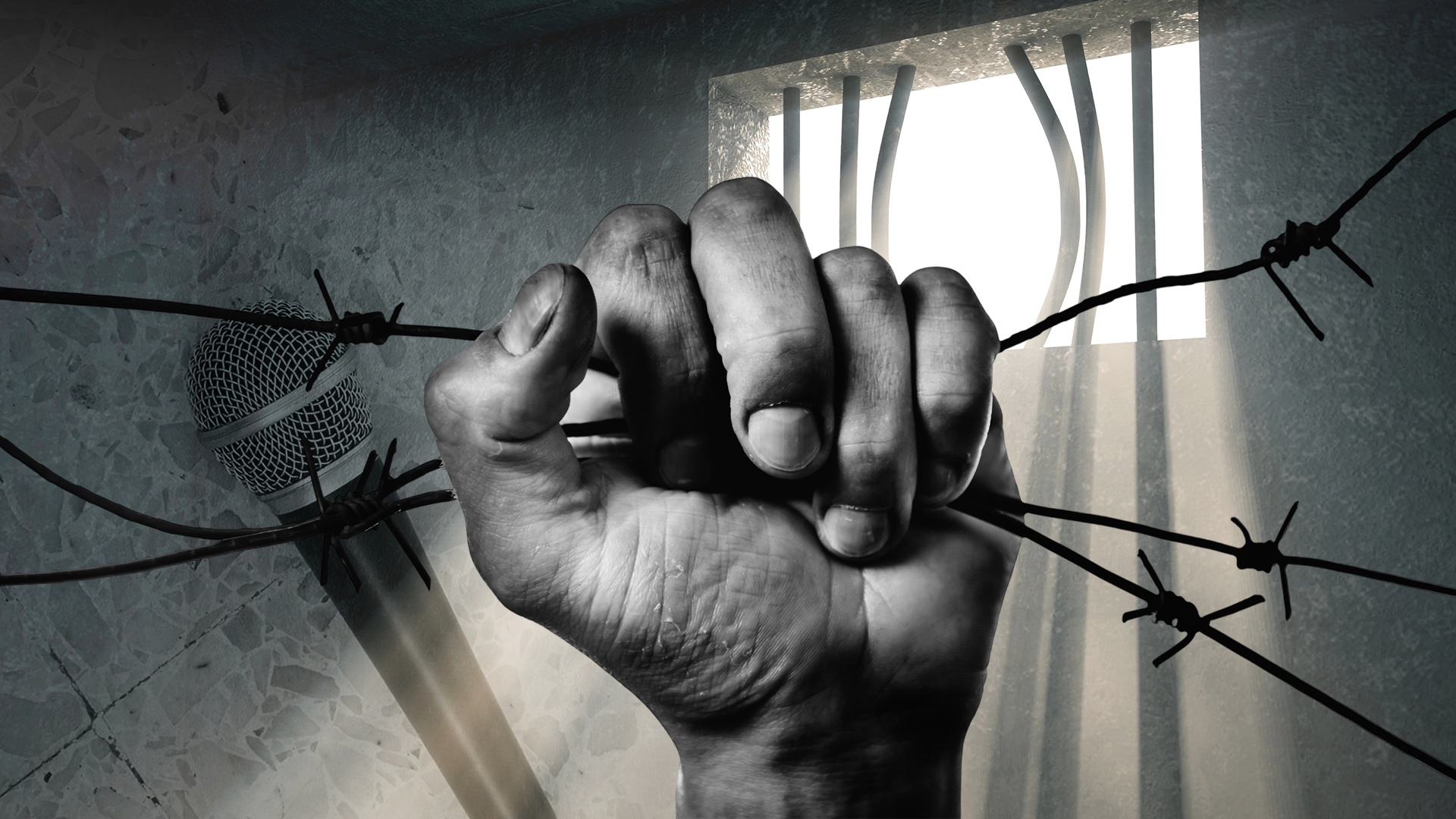
This article highlights known cases of journalist fatalities, the captivity of Ukrainian media workers, and attacks on newsrooms since the start of the full-scale war.
What happened?
The OSCE Parliamentary Assembly has included a resolution on Russia’s crimes against journalists and media in Ukraine in The Hague Declaration. The document was adopted on July 8, 2026, following the Assembly’s 33rd annual session. Data from the Institute of Mass Information—which has been documenting Russian crimes against journalists, newsrooms, and media infrastructure since the start of the full-scale invasion—was used in drafting the resolution. The text of the resolution is available here.
The resolution is based on the findings of the Verkhovna Rada’s Temporary Investigative Commission on investigating Russia’s crimes against journalists and media workers. The delegations of Ukraine and France initiated it.
The document addresses the persecution of journalists, the killing and wounding of media workers, unlawful detentions, pressure on newsrooms, the destruction of media infrastructure, and the damage inflicted on Ukrainian media by Russian aggression. The resolution also raises the issue of supporting independent journalism in Ukraine—both during the war and after its conclusion.
One of the document’s provisions concerns the creation of a special sanctions list of individuals involved in crimes against journalists. It has been dubbed the “Roshchyna List”— named after Ukrainian journalist Viktoriia Roshchyna, who died in Russian captivity. The list is intended to outline personal sanctions against individuals responsible for the persecution of Ukrainian media workers.
For Ukraine, the resolution’s significance lies primarily in the fact that it establishes, at the international level, the systemic nature of Russia’s persecution of journalists and media outlets. Killings, unlawful detentions, torture, the ransacking of newsrooms, the seizure of equipment, the blocking of Ukrainian broadcasting, and the dissemination of propaganda are viewed not as isolated incidents, but as interconnected methods used to curtail independent coverage of the war and the occupation. While the resolution does not trigger automatic legal consequences—nor does it, in itself, secure the release of captives or the punishment of perpetrators—it reinforces Ukraine’s political demands regarding the release of unlawfully detained media workers, support for affected newsrooms, the documentation of crimes, and the imposition of sanctions on those involved in the persecution. Crucially, the document can also serve as an additional basis for international advocacy and the future use of gathered data in investigations.
Furthermore, according to Yevheniia Kravchuk, a member of the Ukrainian delegation to the OSCE Parliamentary Assembly, the resolution’s adoption holds international significance, given that Russian aggression has claimed the lives of foreign journalists alongside Ukrainian ones. She noted that four French media workers were among those killed by the actions of the Russian military.
An International Perspective
Under international humanitarian law, journalists operating in armed conflict zones are classified as civilians, provided they do not take a direct part in hostilities. Additional Protocol I to the Geneva Conventions explicitly stipulates that journalists engaged in dangerous professional assignments in areas of armed conflict must be treated as civilians. Consequently, they are entitled to the protections afforded to the civilian population. The same approach applies to newsrooms, media offices, studios, equipment, broadcast towers, and transmission infrastructure. As a general rule, media organizations, their premises, and their equipment are considered civilian objects. They may not be attacked unless they have become military objectives. The ICRC specifically clarifies that media organizations, facilities, and equipment are generally regarded as civilian objects and are protected under international humanitarian law.
International humanitarian law requires parties to a conflict to always distinguish between military objectives and civilian objects. Attacks may be directed only against military objectives. Civilian objects are protected from attack unless and until they are used in a manner that renders them military objectives.
Furthermore, customary international humanitarian law prohibits arbitrary deprivation of liberty, enforced disappearances, hostage-taking, torture, and cruel, inhuman treatment. These prohibitions also apply to civilian journalists who fall under the control of a party to the conflict.
For an investigation, it is important to establish the circumstances in each case: whether the journalist was identifiable as a media representative, where they were located at the time of the attack, and whether the intended target, the type of weapon used, and whether the attackers could have known about the presence of civilians or journalists. In cases of captivity, it is important to establish exactly who detained the individual, where they were held, whether they had access to a lawyer, family, and medical care, and whether any form of coercion or violence was used against them.
An attack on a journalist or a news outlet affects the public’s right to receive information about the war, occupation, shelling, captivity, destruction, and the situation of civilians. That is why international organizations view the safety of journalists during armed conflict as part of the broader protection of the civilian population and the right to information. UNESCO emphasizes that journalists reporting during conflicts document human rights violations and provide the public with vital information.
General Context
According to the Institute of Mass Information, as of July 14, 2026, 134 media workers have died since the start of Russia’s full-scale invasion; 15 of them were killed while performing their professional duties.
One of the first media workers to die following the start of the full-scale invasion was photojournalist Yevhen Sakun. He worked for the LIVE publication and the Spanish news agency EFE. Sakun was killed on March 1, 2022, during a Russian missile strike on the Kyiv TV tower.
On March 13, 2022, Ukrainian photojournalist Maks Levin went missing in the Kyiv region. His body was found on April 1 near the village of Huta-Mezhyhirska. Preliminary information from the Prosecutor General’s Office indicates that Russian troops killed the unarmed Levin. Reporters Without Borders later released an investigation concluding that Levin and his companion, Oleksiy Chernyshov, may have been executed by Russian soldiers in a forest near Kyiv.
On April 26, 2023, Bohdan Bityk, a Ukrainian producer and fixer for La Repubblica, was killed in Kherson. He was working alongside Italian correspondent Corrado Zunino near the Antonivskyi Bridge. The journalists were clearly identified as press when they came under fire from Russian snipers. Zunino was wounded.
On May 9, 2023, AFP video journalist Arman Soldin was killed near Chasiv Yar in the Donetsk region. He was working with a team of journalists when the area came under Russian fire.
In August 2024, a Russian strike on the Sapphire Hotel in Kramatorsk killed Reuters safety adviser Ryan Evans. A six-person Reuters team was staying at the hotel; two of the agency’s journalists were hospitalized.
Additionally, according to the Institute of Mass Information, as of July 3, 2026, at least 26 Ukrainian civilian media workers and one journalist who had joined the Defense Forces remain in Russian captivity.
UNIAN journalist Dmytro Khyliuk was abducted by Russian troops on March 3, 2022, in the village of Kozarovychi, Kyiv region. He was held as a civilian hostage—first in the occupied territory of Dymer, and later in a pre-trial detention center in Russia. In August 2025, Khyliuk returned to Ukraine after more than three years in captivity.
Journalist Viktoriia Roshchyna disappeared in August 2023 while traveling to occupied territories. It later emerged that she was being held by Russia. In October 2024, Ukraine confirmed the journalist’s death in Russian captivity. According to *Slidstvo.Info*, Roshchyna died on September 19, 2024; shortly before her death, she had been transferred to Pre-trial Detention Center No. 3 in the city of Kizel, Perm Krai, Russia.
In April 2022, Russian security forces detained civic journalist Iryna Danylovych in occupied Crimea. She had been reporting on healthcare issues on the peninsula and the rights of medical workers. In December 2022, she was sentenced to seven years in prison on charges of allegedly possessing an explosive device. Her sentence was later reduced by one month, after which she was transferred to Russia.
Vladyslav Yesypenko, a freelancer for Crimea.Realities (Krym.Realii), was detained by Russian security forces in occupied Crimea on March 10, 2021. He had been filming material for a Radio Liberty project. An occupation court sentenced him to six years in prison, though an appeal reduced the term to five years. Yesypenko was released in June 2025 after serving the unlawful sentence.
Melitopol journalist Iryna Levchenko has been held in Russian captivity since 2023. According to Reporters Without Borders, Russian military forces abducted her and her husband, Oleksandr, on May 6, 2023. Her husband was released in August 2024, while Iryna Levchenko was initially held in Melitopol; in 2025, she was transferred to a pre-trial detention center in occupied Donetsk, and in 2026, to Simferopol. The following individuals remain in Russian captivity or detention:
Oleksiy Bessarabov, Dmytro Shtyblykov, Seyran Saliyev, Marlen Asanov, Timur Ibragimov, Ernes Ametov, Server Mustafayev, Osman Arifmemetov, Remzi Bekirov, Ruslan Suleymanov, Rustem Sheykhaliev, Amet Suleymanov, Asan Akhtemov, Iryna Danylovych, Vilen Temeryanov, Yevhen Ilchenko, Iryna Levchenko, Oleksandr Malyshev, Heorhiy Levchenko, Maksym Rupchov, Yana Suvorova, Anastasiia Hlukhovska, Vladyslav Gershon, Rustem Osmanov, Aziz Azizov, and Hennadiy Osmak.
Vasyl Filim is also held in Russian captivity. He is a cameraman for the Mykolaiv branch of Suspilne who was conscripted into the Armed Forces of Ukraine.
Russia targets more than just journalists working at shelling sites or in occupied territories. Newsrooms, media offices, studios, equipment, TV towers, and other essential media infrastructure also come under fire.
As of July 3, 2026, the National Union of Journalists of Ukraine had confirmed 80 instances of Russian attacks physically affecting Ukrainian media. Of these, 28 involved the destruction or damage of newsrooms and media infrastructure; two newsrooms were destroyed. Another 35 cases involved damage to journalists’ homes or personal property.
One such incident occurred on the night of May 24, 2026, during a Russian attack on Kyiv. At least six newsrooms and media outlets reported damage to their offices and workspaces. Affected entities included the Deutsche Welle Kyiv bureau, the studio of the German broadcaster ARD, Realna Hazeta (relocated from the Luhansk region), the UNIAN news agency, and the online media outlets Graty and Shelter. In some premises, windows were blown out, and ceilings, studios, equipment, and workspaces were damaged.
Following the occupation of Velykyi Burluk in the Kharkiv region, Russian forces seized the radio station Slobozhanske FM’s equipment, frequency access, and branding assets. Station representatives reported that these resources were subsequently used to disseminate Russian propaganda under the Ukrainian media outlet’s brand.
The Institute of Mass Information also documented at least 24 publicly known attacks on Ukrainian TV towers and other television infrastructure across 12 regions. The highest number of such incidents occurred in the Kharkiv, Sumy, and Kherson regions. Strikes on television infrastructure were also recorded in the Dnipropetrovsk, Zaporizhzhia, Kyiv, Chernihiv, Donetsk, Luhansk, Vinnytsia, Zhytomyr, and Rivne regions.
