Bedridden “Azov man” in Russia was convicted of “terrorism”
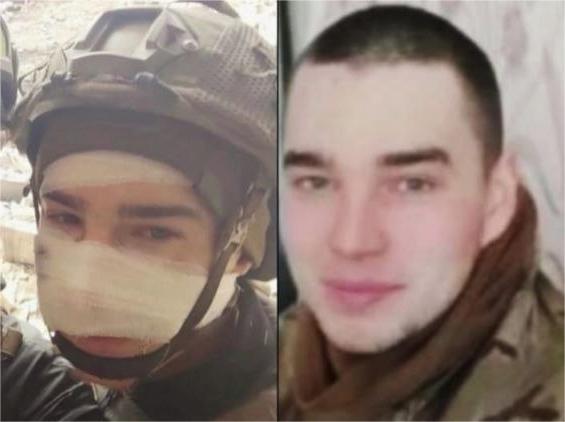
“Azovian” Bohdan is far away: in Russian captivity. Confined to bed after several shell shocks and severe beatings. Sentenced by a Russian court to 16 years in prison.
In September 2020, Bohdan Trofimyuk from the city of Slavuta, Khmelnytskyi region, turned 18. The guy had already studied at college to become an auto mechanic and decided not to do military service in the army, but to join “Azov” — following his friend. He consciously chose the path of a defender of Ukraine, devoting himself to serving the Motherland and protecting its independence, says Inna Trofimyuk:
— Bohdan is a loving son, a caring brother, very kind, purposeful, responsible, serious, mature beyond his years. He decided to go to “Azov,” and on February 1, he went to Kyiv, and three weeks later to Mariupol for a young fighter’s course. He liked everything very much — the routine, the schooling; he endured everything. In June, our whole family came to see him in Mariupol. We met, and he walked with us. He came home on vacation in the fall. And all the time he played Vakarchuk’s song “Only the February Behind the Window.” Now I constantly remember it...
A full-scale invasion found Bohdan at his place of service in Mariupol. On March 5, he received a concussion, and on April 9, he suffered another severe acubarotrauma.
— There was at least some kind of communication then, but he didn’t even tell me anything about the shell shock. I found out from the guys from Slavuta with whom he conversed. And I write to him: “Is it true, Bohdan, that you are in the hospital?” And he says: “Mom, who told you? Yes... He didn’t want me to worry, so he didn’t tell me. I only called on the 28th. And I hear: his speech is very bad, so slow. I say: ‘What’s wrong with you, son?’ And he: ‘Everything is fine, Mom...’
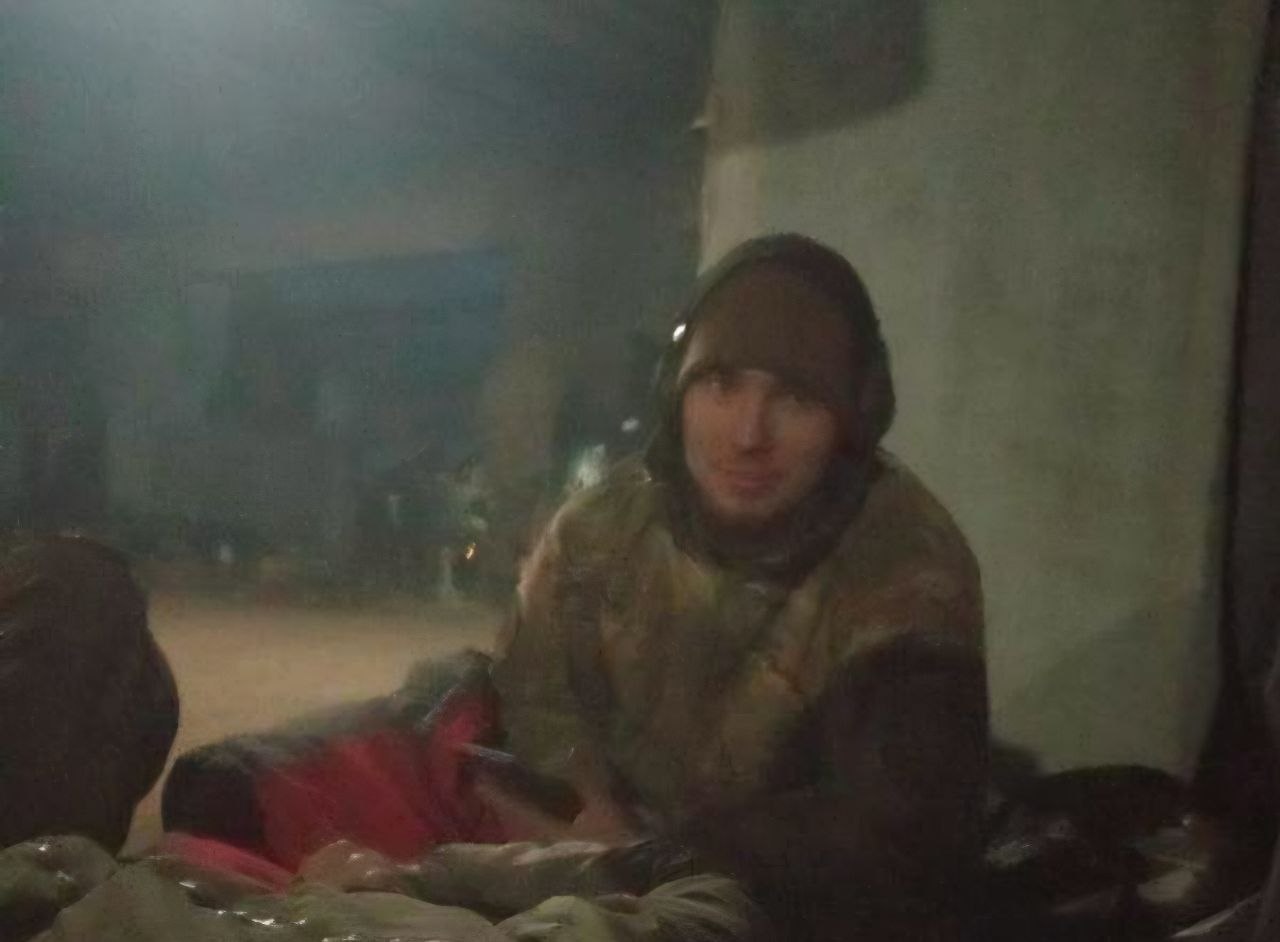
Inna says that when fierce battles raged in the city, she prayed for only one thing: that the Lord would save her child. And Bohdan survived, but was captured. It happened on May 17 at Azovstal. The next day, he and his brothers-in-arms were already in Olenivka. On June 13, he even called his mother and asked her to transfer information about his captivity to the SBU. The guy’s speech was just as slow; it was obvious that he still needed medical attention after the concussion.
— On June 18, there was another call from him, literally for a few seconds. He asked whether I had gone to the police and whether I had given information about him. He said he was fine. After that, there was no more contact with him...
On the night of July 29, a terrorist attack occurred in Olenivka, which claimed the lives of at least fifty Ukrainian prisoners. In September, during the exchange, one of Bohdan’s commanders returned from captivity with the news: the guy was alive and even recovering from shell shock. Other liberated brothers-in-arms also brought bits of hope: ‘seen alive,’ ‘he is recovering,’ ‘he is moving around with the help of his brothers-in-arms.’ The Trofimyuks” lives became a waiting game for these little bits of news — from exchange to exchange. In July 2023, a guy who was in the medical unit at the same time as Bohdan was released from captivity — already in the Horlivka colony. From him, Inna learned that her son could not walk.
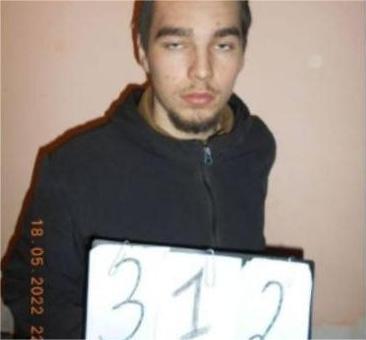
— When there was a “reception” in Horlivka, Bohdan was beaten very badly. After that, he stopped walking. His brothers-in-arms said that they generally thought that he was done for. After the beating, the guards dragged him away like a sack of garbage. He lay there for a long time like a vegetable. He didn’t speak... Nothing... Then the doctor who was with them at Azovstal cared for him. Bohdan came to his senses. But the consequences are grave; he remained confined to bed. If there had been some rehabilitation, he would have started walking a little... Later, the wife of one of the brothers, who was traded in 2023, called. She said that her husband was very grateful to Bohdan. “My son is so strong in spirit that, even when he was bedridden, he supported the guys and their morale.”
The next piece of information arrived only in September 2024. Several released military men immediately contacted Inna. It turned out that Bohdan was now in Torez and still could not walk.
— His brothers looked after him. He already had a wheelchair. They even took him out to the medical unit’s yard. At the end of 2024, Bohdan was apparently transported to the Altai Territory... I don’t know for how long or exactly where. But in 2025, he ended up in Saransk, in pre-trial detention center No. 1.
On February 6, 2026, in Saransk, during a visit to the Central District Military Court, Bohdan Trofimyuk was sentenced to 16 years in prison. The articles of accusation are traditional for “Azovites”: Art. 205.3 of the Criminal Code of the Russian Federation (training for the purpose of carrying out terrorist activities) and Part 2 of Art. 205.4 (organization of a terrorist community and participation in it). He was not charged with any specific crimes. Guards had to carry Bohdan into the hearing.
Earlier this winter, Mediazona journalists highlighted the large number of off-site hearings held by the Central District Military Court (based in Yekaterinburg) in Saransk. Over the course of a single week in the capital of Mordovia, nearly two verdicts were handed down daily—Bohdan being among the defendants. This occurred even though “Azov” members are typically tried at the Southern District Military Court in Rostov-on-Don, while soldiers captured during the Kursk operation are usually tried at the 2nd Western District Military Court. Saransk was likely chosen because Mordovia houses the infamous Penal Colony No. 10, where Ukrainian prisoners are held. “Sending a single judge to Saransk is cheaper than transporting hundreds of prisoners to court,” Mediazona journalists speculated. Inna learned of the verdict from a Russian-appointed lawyer. It is known that Bohdan dismissed this lawyer after the trial; he may have been forced to do so. There is no contact with Bohdan, and his exact whereabouts are unknown—though he is likely still in Saransk Pre-trial Detention Center No. 1 or Mordovia Penal Colony No. 10.
“Bohdan needs medical treatment!” says Inna Trofimyuk. “He is now entering his fifth year of captivity. I fear the consequences of his not receiving care in specialized neurosurgical facilities could be irreversible! It is a very serious condition that could involve brain damage, spinal cord injury, paralysis, and muscle contractures caused by immobility!” Aside from the fact that he cannot walk, he suffers from constant, severe headaches and panic attacks... A fellow soldier of his spoke about this two years ago. Where is my son now? What is happening to him? There hasn’t been a letter, nothing... I am waiting for him so desperately. I keep thinking: “God, when will that day finally come?” I am waiting for him so much!
For a mother, there is no greater pain than being unable to see her child or not knowing what is happening to him. Every day of waiting is a struggle between hope and tears. I live for the day the phone rings and I hear my son’s voice: “Mom, I’m home.” Bohdan is the kind of son you can talk to about anything. When he was studying at a college in Ostroh after the ninth grade, he would come home on weekends and always bring me a white rose... He missed home. It is so hard. I want him home so badly! We are all waiting for him.
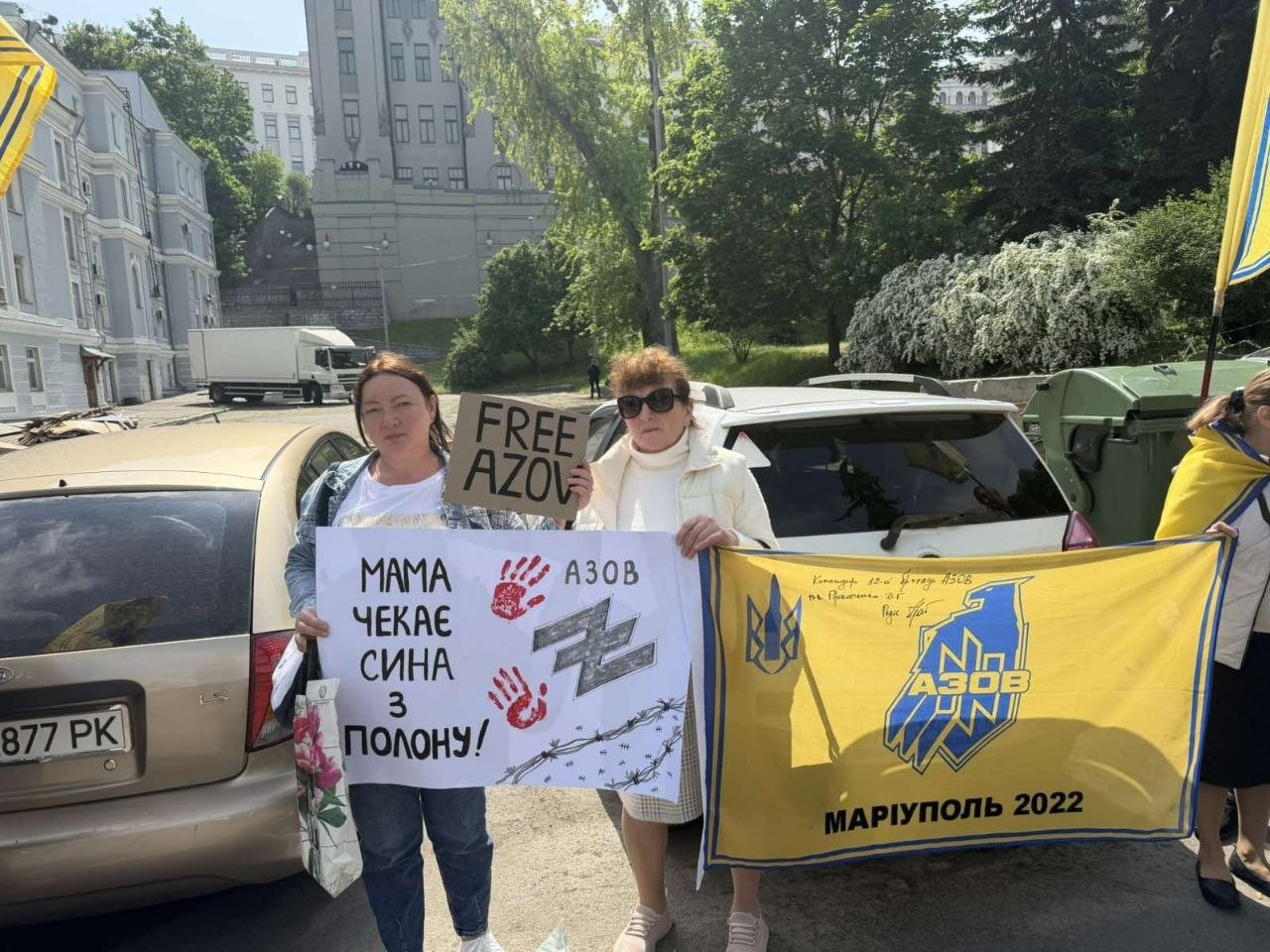
Combatants cannot be held criminally liable solely for their membership in armed forces or for participating in training or combat operations. However, the prosecution of “Azov” fighters has nothing to do with fair justice. Most of them receive lengthy prison sentences on terrorism charges simply for defending their country. On August 2, 2022, the Supreme Court of the Russian Federation designated “Azov” a “terrorist organization.” Yet, a significant number of the service members currently being tried for their affiliation with the unit had already been in Russian captivity for months by that time. Both international and Russian law prohibit the retroactive application of criminal or administrative liability. It is telling that the Supreme Court’s decision remained classified for a long time; it was only last year, thanks to the Memorial Center, that the text became available to the public. According to human rights defenders, this decision is based on unsubstantiated claims, the unlawful extension of Russian court jurisdiction to Ukrainian territory, the arbitrary consolidation of unrelated events, court rulings, and cases, and a systematic disregard for legal principles.
Furthermore, under Article 109 of the Third Geneva Convention relative to the Treatment of Prisoners of War, parties to a conflict are required to repatriate seriously ill and seriously wounded prisoners of war—regardless of rank or number—once their health has improved sufficiently to allow for transport.
Exchanges involving prisoners of war with serious health issues have taken place on multiple occasions, as have exchanges involving the return of young men born after the year 2000. It remains unclear why Bohdan—who is bedridden and under the age of 25—has not yet been included in an exchange.
