Prosecutor General’s Office has registered nearly 69, 000 Russian war crimes over the past year
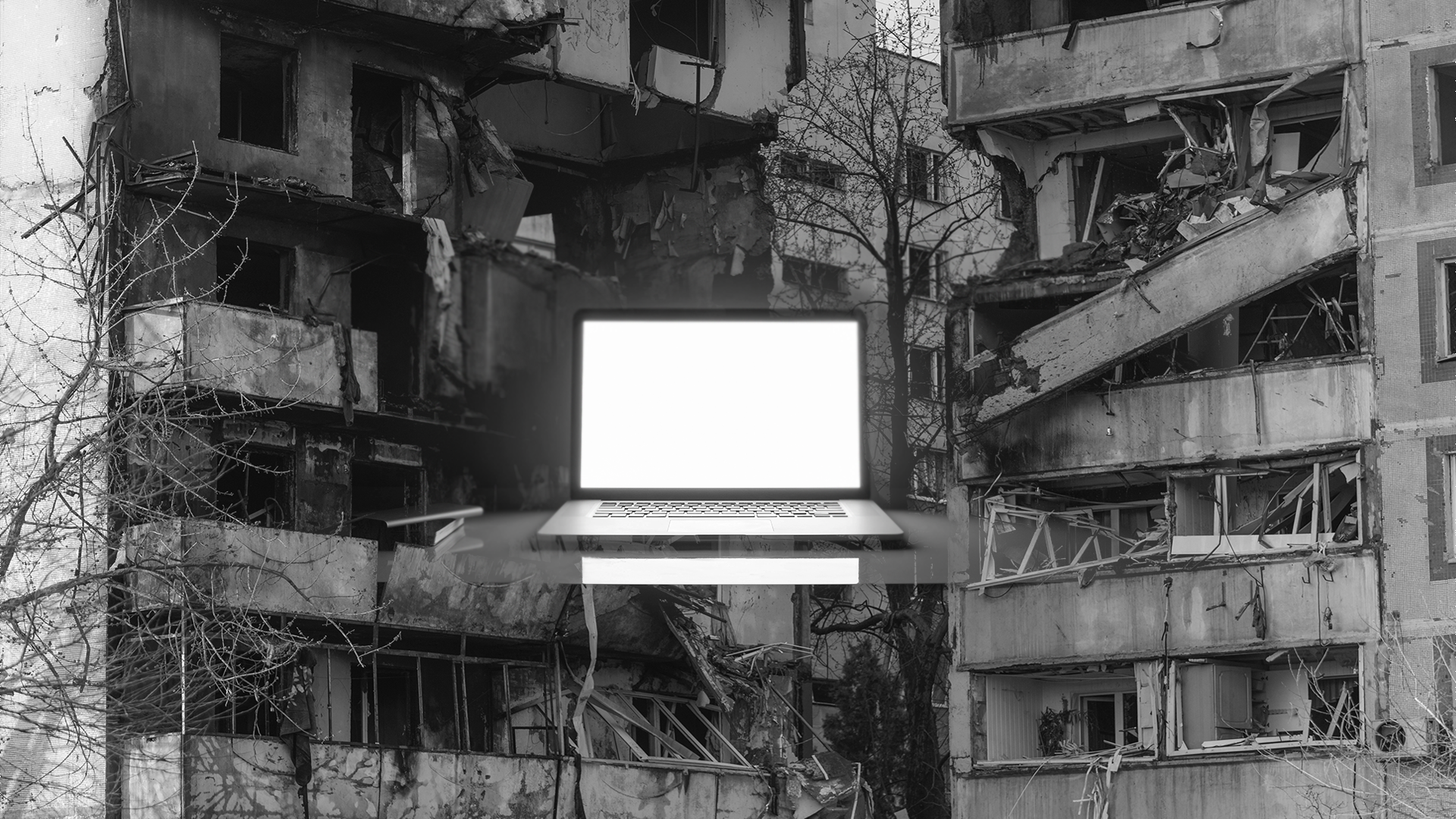
What lies behind the numbers
Over the year from June 2025 to June 2026, the Office of the Prosecutor General of Ukraine registered and investigated 72,295 criminal proceedings related to Russian aggression. Of these, 68,900 cases were opened under Article 438 of the Criminal Code—specifically regarding war crimes. Prosecutor General Ruslan Kravchenko announced this while reporting on his first year in office.
“For some, this is a lot; for others, it is too little. For me, it is not enough,” the prosecutor noted.
During his agency’s year of operations, 349 individuals were notified of suspicion of committing war crimes. A total of 258 criminal cases were referred to court, and guilty verdicts have already been handed down to 97 individuals. These rulings include the April conviction of the occupation-appointed “director” of the Askania-Nova reserve, who was sentenced to 15 years in prison for removing rare animals from the sanctuary. This decision marks Ukraine’s first conviction for a war crime against the nature reserve fund.
Separate proceedings are underway regarding crimes against children; courts have already issued 81 verdicts, 18 of which resulted in life imprisonment. In total, since the start of the full-scale invasion in February 2022, the aggregate number of recorded crimes of aggression has exceeded 256,000, while the number of war crimes specifically stands at over 225,000. Kravchenko released these figures in May 2026 at the “United for Justice” international conference.
Furthermore, as of June 23, 2026, the T4P initiative had documented 110,095 war crimes committed during the full-scale war in Ukraine.
The International Dimension
Most recently, in March 2026, the mandate of the Joint Investigation Team (JIT)—established to investigate core international crimes committed in Ukraine—was extended for another two years. Operating with Eurojust’s support, this team brings together law enforcement and prosecutorial authorities from Ukraine, Lithuania, Latvia, Poland, Estonia, Romania, and Slovakia. Its work involves partnerships with Eurojust, Europol, and the Office of the Prosecutor of the International Criminal Court.
The Joint Investigation Team enables states to coordinate investigative actions, exchange evidence, work with witnesses and victims in different countries, and avoid duplicating investigations. This is particularly important in cases where crimes were committed on Ukrainian territory, yet their consequences, evidence, or suspects are linked to other states.
Following the mandate extension, the team is set to intensify its efforts regarding crimes against Ukrainian children. A specific focus is placed on the unlawful transfer and deportation of children from Ukraine to Russia and Belarus. According to Eurojust, this area has been identified as a key priority for the Joint Investigation Team’s future work. It was precisely for the unlawful deportation and forcible transfer of Ukrainian children that the International Criminal Court issued arrest warrants in March 2023 for Vladimir Putin and the Russian Commissioner for Children’s Rights, Maria Lvova-Belova.
Although the International Criminal Court plays a crucial role in restoring justice, it cannot single-handedly ensure full accountability for Russia regarding the war against Ukraine. The Court’s mandate allows it to investigate war crimes, crimes against humanity, and genocide committed during the course of hostilities. However, a key issue lies in jurisdiction over the root cause—the crime of aggression itself. Since the Russian Federation is not a party to the Rome Statute, the ICC is legally unable to hold the Russian leadership accountable for the very act of the unprovoked armed attack.
To address this legal gap, Ukraine and the Council of Europe signed a bilateral agreement in Strasbourg on June 25, 2025, to establish a Special Tribunal for the Crime of Aggression against Ukraine. Unlike national courts, which adjudicate specific war crimes, or the International Criminal Court, which deals with war crimes, crimes against humanity, and genocide, this tribunal is designed to focus specifically on accountability for the act of waging a war of aggression. Its mandate covers the investigation, prosecution, and trial of those bearing the greatest responsibility for planning, preparing, initiating, or executing the aggression against Ukraine. This primarily concerns the top political and military leadership of the aggressor state, as well as other individuals who may have played a key role in the decision-making and implementation of the attack.
At the same time, the tribunal still requires a full-scale practical launch: in January 2026, the Council of Europe and the European Union agreed to fund a special preparatory team tasked with laying the institutional, logistical, and organizational foundations for its operations; subsequently, in May 2026, 36 states and the European Union supported the creation of an Enlarged Partial Agreement on the Steering Committee of the Special Tribunal, which is to ensure the mechanism’s funding and administrative support.
Russia continues to commit war crimes.
According to the UN Human Rights Monitoring Mission in Ukraine, at least 815 civilians were killed and another 4,174 injured in Ukraine during the first four months of 2026. This number represents a 21% increase compared to the same period in 2025. The situation deteriorated further in May 2026, with the UN recording at least 274 civilian deaths and 1,763 injuries, marking the highest monthly figure for civilian casualties since April 2022. Missile strikes, drone attacks, aerial bombardments, artillery shelling, and the use of explosive weapons in populated areas remain the primary causes of death and injury.
Conflict-related sexual violence also remains among the crimes documented as committed by Russia. In 2026, the UN included Russian armed forces and security services on the list of parties responsible for conflict-related sexual violence for the first time. A report by the UN Secretary-General details 310 verified cases of such violence against Ukrainian prisoners of war and civilians held by Russia or occupation authorities. Due to stigma, fear, and trauma, the actual number of victims may be significantly higher.
The destruction of Ukrainian cultural heritage is also among the consequences of Russian aggression. According to the Ministry of Culture of Ukraine, as of the end of May 2026, Russian attacks had destroyed or damaged 1,913 cultural heritage sites and 2,573 cultural infrastructure facilities.
Alongside cultural sites, educational infrastructure also remains under attack. During Russia’s war against Ukraine, shelling and bombing have damaged approximately 4,000 educational institutions—with more than 400 destroyed—reported Minister of Education and Science Oksen Lisovyi.
Documenting these crimes, preserving evidence, and holding the perpetrators accountable remain essential for ensuring justice for the victims and guaranteeing that such crimes are not normalized.
