Yevhen Zakharov: ‘In no country have I seen such an awareness and vocal support for Ukraine as in Sweden’
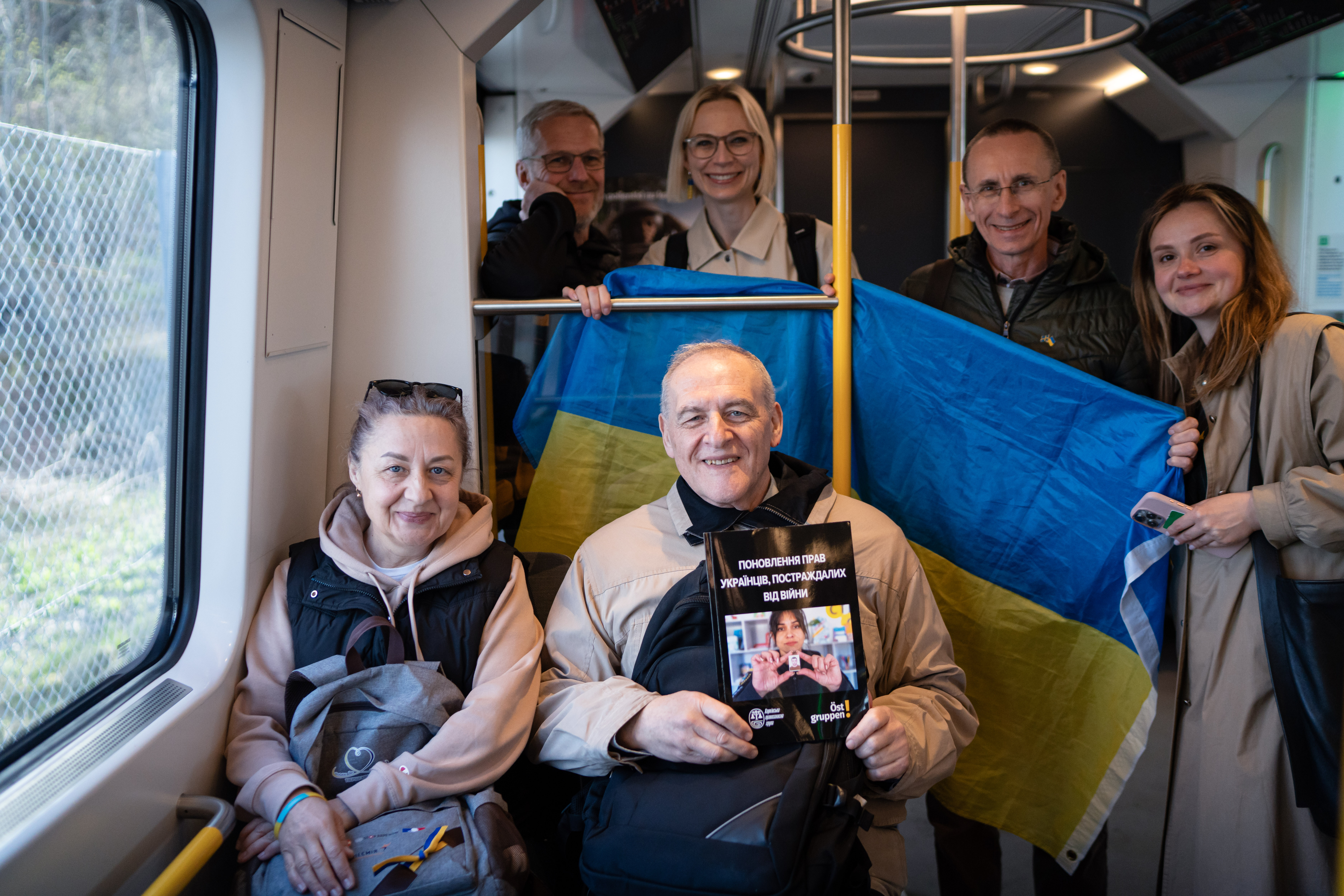
Within the framework of the project “Restoring human rights for Ukrainian victims of Russian war related crimes”, human rights activists tried to establish the whereabouts of Ukrainian prisoners in Russia, provided legal assistance to their families, and did everything possible to bring the prisoners home. We discussed the project’s results and fruitful cooperation with Swedish partners with the director of the Kharkiv Human Rights Protection Group, Yevhen Zakharov.
— You recently returned from Sweden, where you went at the invitation of Östgruppen för demokrati och mänskliga rättigheter. What are your impressions of the trip?
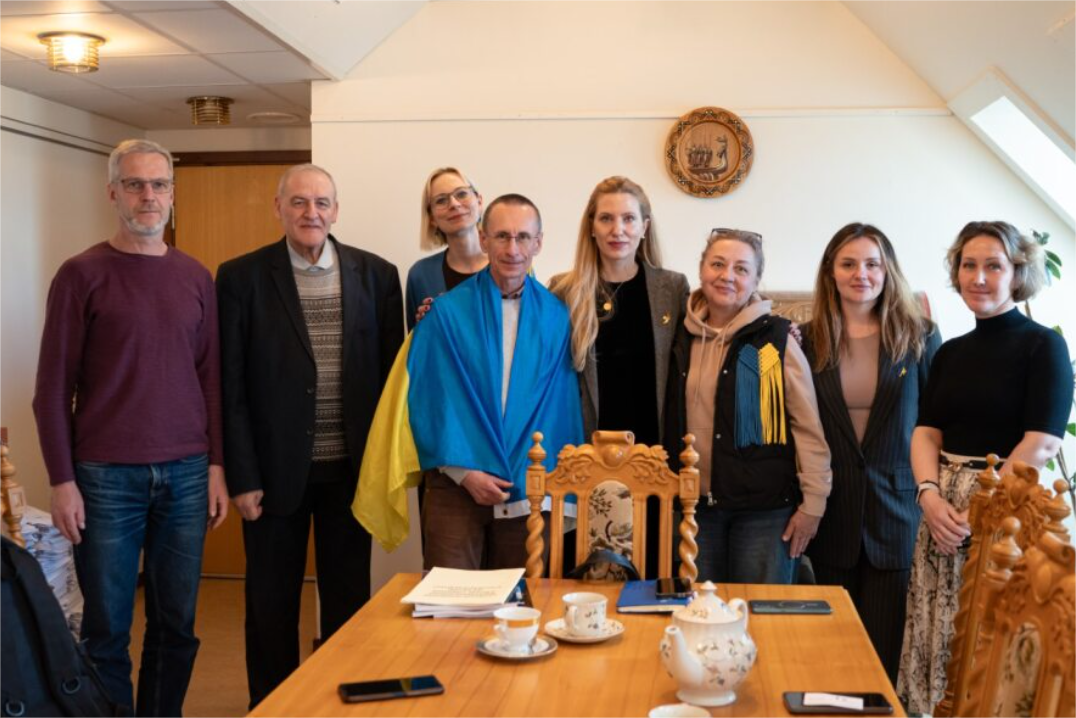
— We were received very well by our Swedish partner, who organized a comprehensive program for us. During our visit to the Swedish Parliament, we had extensive discussions with individual deputies about the situation in Ukraine. Furthermore, we toured a pre-trial detention facility in Stockholm, where we were shown the cells and told about the structure of the entire Swedish penal system. It was very interesting. We had a very stimulating meeting with an appeals court judge. It was supposed to last an hour, but we talked for 2.5 hours and couldn’t stop!
In addition, we spoke at two rallies. In general, three rallies are held in Stockholm every week against the war that Russia has unleashed—on Sunday, Monday, and Wednesday. On Sunday—in the very center of the city. On Wednesday, people gather and chant, “Stop the war!” near the Russian embassy. It was at these two rallies that I spoke. And we also had an interesting meeting at the Ukrainian embassy in Sweden. There, we talked about Ukrainian prisoners of war and civilian prisoners in Russia and in the occupied territories, which are the main topics of our project. We visited the Swedish Institute and made a presentation about the project. We were at the Ministry of Foreign Affairs. We met with representatives of the department that works with Ukraine. There, too, we had a professional conversation about what is happening during the war and about our prisoners of war… We also visited a government research institute which focuses on Eastern Europe, including Ukraine (Stockholm Centre for Eastern European Studies). There was also a meeting with the civil rights organization Civil Rights Defenders, where we discussed our work…
— In your opinion, are people in Sweden generally aware of the situation in Ukraine? Did you tell them anything that surprised Europeans?
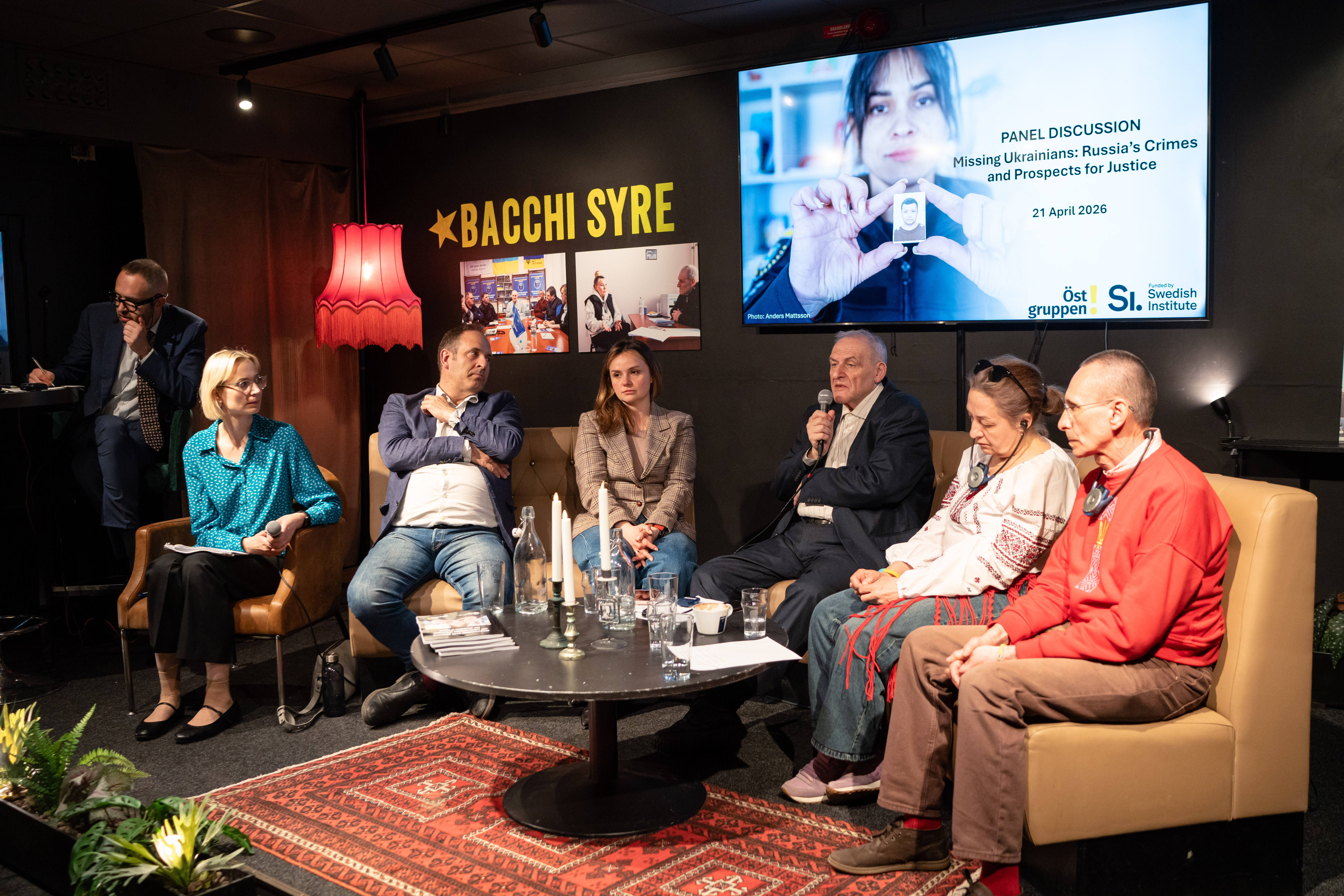
— During our visit to Parliament, we discussed the fate of detained Ukrainian prisoners, including at a panel discussion. And I think the people who listened to us had no idea of the level of torture, the level of abuse that our prisoners, both civilians and military, are going through. They had no idea that there were so many civilian prisoners in Russian places of detention and in the occupied territories. More than 16,000! This figure amazed them. In general, I have been to many countries in Europe during these four years of war. In no other country have I witnessed such a unified and conscious commitment to Ukraine and its interests, shared equally by the state and society alike. Here, both society and the state are united. Sweden is one of the countries that supports us the most. I, personally, saw this during this trip. I never heard this “on one side…, but on the other…” I didn’t hear any doubts about who the aggressor is and who the victim is in this war. Sweden has been very supportive, for which we are grateful!
— Together with you, two ex-prisoners visited Sweden—Natalia Shylo and Yuriy Shapovalov, as well as Tetyana Matyash-Myrna, a Kharkiv resident who lost her eleven-year-old son due to Russian shelling. Did their stories resonate with the Swedish audience?
— Both Natalia and Yuriy talked at length about their imprisonment. First, on the very first day, at a rally, and then at other public events, during a roundtable in Parliament, and during a public discussion. The Swedes were surprised: how can you be accused of espionage for expressing your opinions and also receive such a term of imprisonment as Yuriy Shapovalov, 13 years. Both Yura and Natalia later said that they felt incredible support in Sweden. At one of the public events, the Swedes even raised money for them. In addition, during the visit, we gave several interviews, including one with Sweden’s largest commercial television channel, TV4.
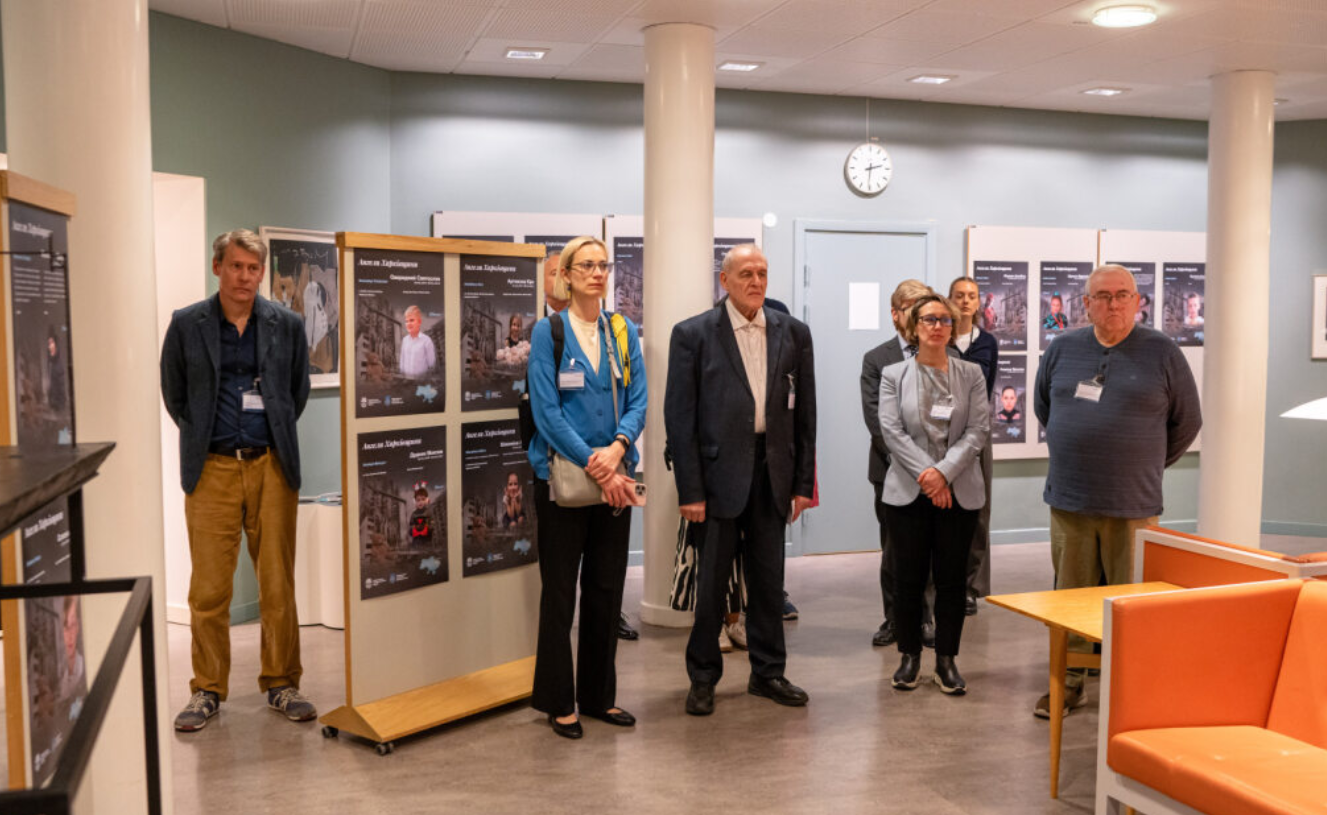
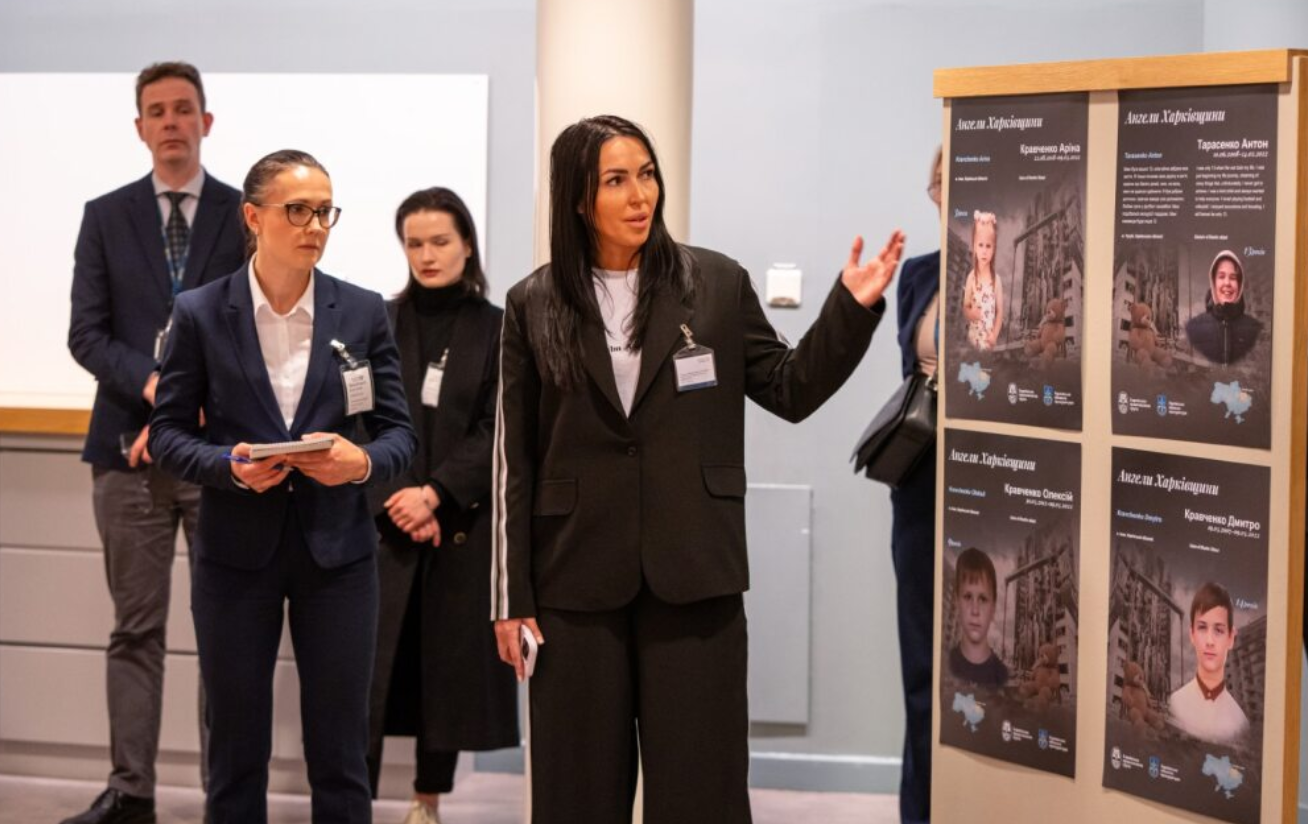
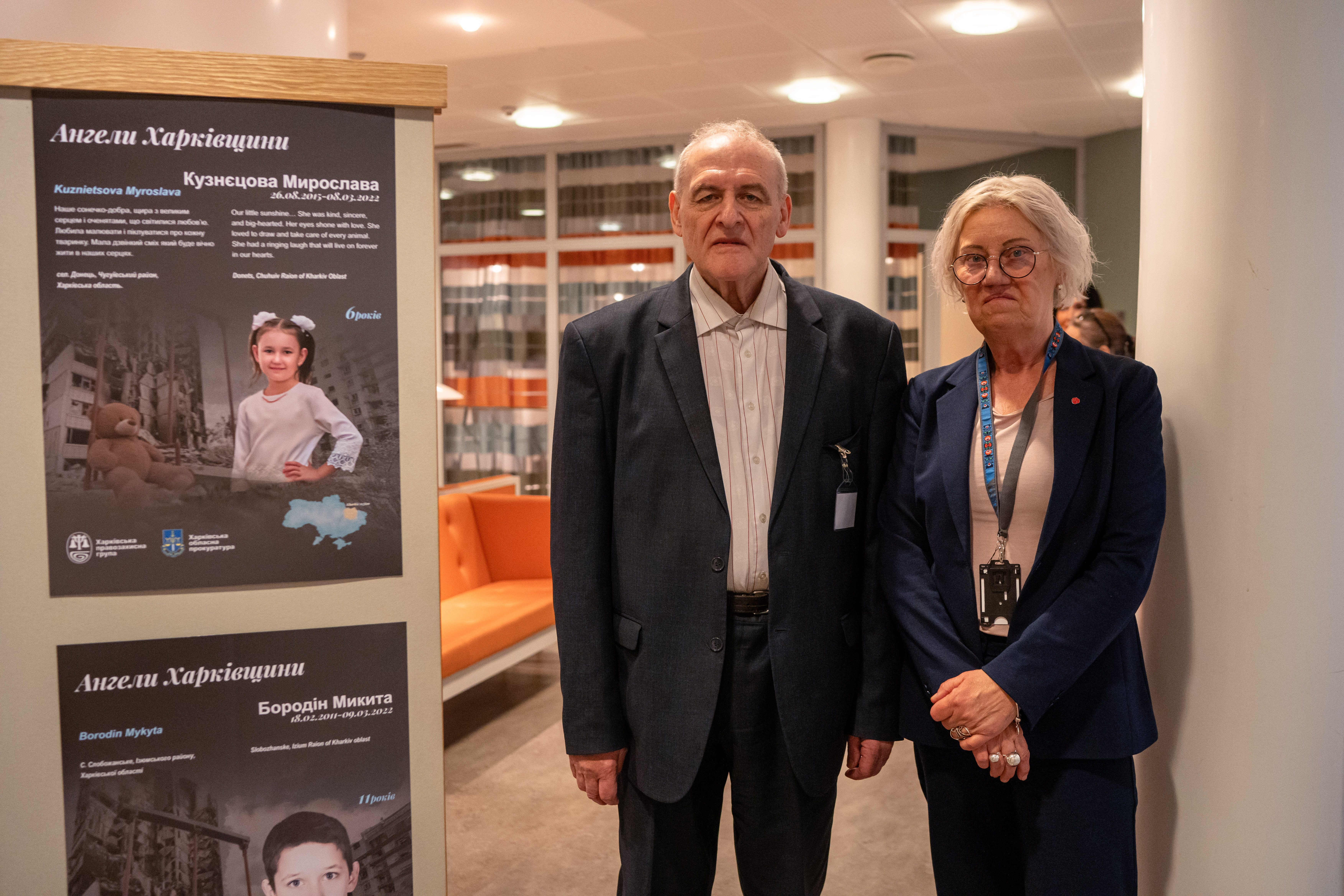
An exhibition dedicated to the memory of the children who died in the Kharkiv region—“Angels of Kharkiv Region” was opened at the Swedish Parliament. Tetyana Matyash-Myrna spoke there. Many people came to the opening, including members of Parliament. They asked a lot of questions… I can say that the visitors took these stories very close to their hearts. Carina Ödebrink, a member of the Swedish Parliament from the Social Democratic Party and a special rapporteur of the OSCE Parliamentary Assembly, helped us a lot in organizing the exhibition “Angels of Kharkiv Region”. And since 2025, Carina Ödebrink has been the Special Envoy on Russian Abductions and Deportations of Ukrainian Children. The exhibition was shown for a week.
— The overall goal of the project was to protect people whom Russia has unlawfully imprisoned. Many of them have already been convicted. And recently, there have been more and more such trials…
— Yes, the number of convicted people is growing. In total, about three thousand Ukrainians have been convicted. Moreover, the majority of them are military personnel: approximately 2,400 people. In our database, the number of convicted people is just over 1,000, and the total is about 3,000. And at the beginning of 2024, there were only a few dozen of them. In 2024, 2025, and part of 2026, their number increased significantly.
— What is special about these trials?
— They are all falsified: all the evidence was extracted under torture, both from civilians and military personnel. The main evidence relies on the defendant’s admission of guilt. It should also be said that everyone who was captured on the territory of the Russian Federation was automatically accused of either committing terrorist acts, or attempting terrorist acts, or preparing for terrorist acts—depending on the circumstances in which they were captured. These people receive very long sentences, during which the first three or five years are spent in prison. The rest of the term is from 15 to 30 years of strict regime and up to life imprisonment. Ukrainians serve their prison terms in one of seven Russian prisons. We know exactly where the prisons are. So we are trying to find people. Relatives of prisoners, their wives, and mothers consult with our lawyers and write letters with requests to these prisons. In some prisons, they answer quite politely to a question: Is there such a person in them or not? And in some prisons, they simply refuse to answer, citing a regulatory act or the supposed inability to disclose personal data.
— A component of the project was also the creation of a database in which all cases of disappearance, detention, and captivity are recorded...
— Yes, for this project, we created a database almost from scratch. In fact, we started working on it a little earlier than the project’s start, in October 2024 (the project formally started on November 15, 2024). If we take public organizations, I think that now we have the largest database in Ukraine on prisoners of war and civilian prisoners. Only state bodies that deal with this topic have more information. The Coordination Headquarters for the Treatment of Prisoners of War has a larger database, of course. If we find information they don’t have, they enter it into their database and check it. And from time to time, we compare what we have with what they have. In general, we cooperate with them constantly. And what is nice to note is that we have very productive working relations; I would even say friendly. Of course, there are some things that they cannot tell us; we accept this a priori and treat it with understanding. And in general, without such coordination of actions with state bodies, the work is simply impossible.
— What else, besides creating a database, did this project bring? Did you achieve the expected result?
— The database is just a tool for work, for searching. We have determined the whereabouts of 3,671 prisoners. And I should note that in reality, there were even more of them, 4,000 in total. But during the period while the project was running, many prisoner exchanges took place. In 2025, more than half of the people exchanged during the war were returned home. And this year, there have actually been five exchanges. And I hope that there will be more exchanges in May. So, as a result of our search work—within the framework of this and one another project—we have identified 3,671 people currently in captivity. These are the results of our work. After all, knowing a prisoner’s whereabouts is essential. When we know where a person is being held, we can ask about their exchange. This is the first thing. Secondly, according to Russian law, lawyers can visit prisoners who have already been convicted, talk to them face-to-face, find out about their problems, provide humanitarian aid, deliver a parcel, deposit money into a personal account so that a person can buy food or cigarettes in a store in the colony... The more we learn about where prisoners are held, the more people we can help: find out about their health, and bring them medicine. We had specific stories, for example, of a prisoner who was denied medical care. We turned to the Russian ombudsman, Moskalkova. She reacted by sending her people to the colony to make sure we were writing the truth. And this person was placed in a civilian hospital outside this colony. It was in Saratov. Now this person is healthy.
— Is this a convicted prisoner?
— Yes, he is a convict. There is no access to unconvicted prisoners. They are mostly in the mode incommunicado—without contact with the outside world. True, it depends a lot on the colony. It happens very differently. I can say that in Grozny, for example, there was a very steady attitude towards Ukrainian prisoners of war and civilians. They were allowed to call home, fed normally, and not beaten. In the Dimitrovgrad colony, there is a normal attitude towards both convicts and non-convicts. There, through Zona-telecom, our people can receive and write letters. Of course, this correspondence goes through censorship, but there is still such an opportunity. They are fed normally there; they are not tortured. I heard from Russian lawyers that this is the best prison in Russia. Well, that is, as always, it all depends on the people.
— The project ends on May 15. How can we use its results in the future?
— Thanks to the information that we managed to find, we can continue to help those Ukrainians who are in captivity. In particular, we can assist Russian colleagues. We can connect the prisoner’s family with Russian lawyers. The family can enter into an agreement with the lawyer in accordance with Russian law. And under this agreement, the lawyers can meet with the convict, deliver a message from the relatives, and learn how the prisoner is feeling. All this is thanks to the information that we found during this project. We will continue to search for the missing people. After all, in our database alone, there are 9,253 missing persons. It is unknown whether they are alive and, if so, where they are. We need to keep going.
An analytical report about the missing Ukrainians, written by KHPG and Östgruppen för demokrati och mänskliga rättigheter, can be found here.