How Russia Abducts Ukrainian Children and Erases Their Identity
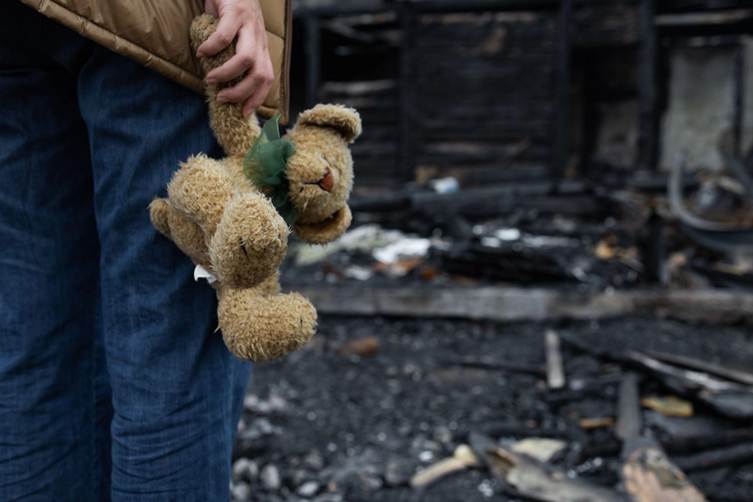
International investigations, testimonies from the children themselves, and data provided by Ukrainian authorities indicate that Russia’s actions constitute not merely a war crime, but a deliberate policy aimed at eradicating Ukrainian identity.
Recently, the UN Independent International Commission of Inquiry on Ukraine declared that the deportation and forced transfer of Ukrainian children by Russia constitute both war crimes and crimes against humanity. This conclusion is detailed in the Commission’s report.
The report notes that verified evidence regarding the removal of at least 1,205 children from five regions of Ukraine confirms the systemic nature of these actions and their classification as international crimes.
The Commission also emphasizes that Russian authorities systematically failed to inform parents and legal guardians of their children’s whereabouts and held the children under coercive conditions, thereby effectively preventing their return. Furthermore, Russia has failed to establish a single effective mechanism to facilitate the return of these deported children to their homes. Instead—according to data from the UN and Ukrainian sources—the occupying authorities have not only attempted to place these children for long-term residency with Russian families or in institutions within the Russian Federation, but have also systematically subjected them to programs of ideological indoctrination.
Specifically, under the guise of so-called “cultural-educational excursions,” children from temporarily occupied territories are transported to Russia as part of the “Cultural Map 4+85” project—an initiative launched by the Russian Ministry of Culture and implemented by the state-run agency “Rosconcert.” Formally, this project is presented as a “cultural introduction to Russia”; however, in reality, it constitutes an effort to integrate Ukrainian children into the Russian socio-cultural sphere, impose Russian historical and cultural narratives upon them, and mold them into “new citizens” loyal to the Kremlin. The Main Intelligence Directorate (GUR) emphasizes that such actions constitute a form of Russia’s “humanitarian aggression,” aimed at erasing Ukrainian national identity and raising a generation of children in the occupied territories who identify with the aggressor state.
As of late March 2023, Ukrainian authorities had officially confirmed over 19,500 cases of the deportation or forced removal of children from the temporarily occupied territories. This figure shows the number of children entered into state registries following receipt of reports from parents, relatives, witnesses, and local officials, and subsequent verification of this information by authorized agencies. Concurrently, the Ministry of Internal Affairs’ registry of missing persons lists approximately 2,000 missing children.
Testimonies from returned children, along with the findings of both international and Ukrainian investigations, indicate that this involves not merely unlawful displacement, but a systemic policy of assimilation. Children are compelled to switch to speaking Russian, sing the Russian national anthem, and participate in propaganda-driven and “military-patriotic” events; in some instances, they are even trained in the use of firearms.
A distinct facet of this policy is the forced adoption of Ukrainian children within Russia. Removed children are entered into Russian databases, where they are registered as Russian citizens, often with their personal details—specifically their names, dates of birth, and places of birth—altered. Russian legislation has been amended to streamline the procedures for placing these children under guardianship and facilitating their subsequent adoption. Initially, children are placed under temporary guardianship, after which they are granted Russian citizenship—a step that paves the way for their final adoption. This practice is carried out with the support of Russia’s highest political leadership. Russian President Vladimir Putin has signed decrees simplifying the naturalization of Ukrainian children and has also issued instructions to facilitate their transfer. Consequently, on March 17, 2023, the International Criminal Court issued arrest warrants for Putin and the Commissioner for Children’s Rights, Maria Lvova-Belova, on suspicion of the unlawful deportation and transfer of Ukrainian children.
The international community has repeatedly condemned these actions. In particular, on April 5, 2023, during a meeting of the UN Security Council, 49 countries issued a joint statement opposing Russia’s attempts to justify the deportation of children.
The process of returning the children remains complex and protracted. The Office of the Prosecutor General of Ukraine emphasizes that, to date, no single transparent protocol or mechanism exists that would enable the effective return of Ukrainian children deported to Russia. According to Yuliia Usenko, Head of the Department for the Protection of Children’s Interests and Countering Violence within the Office of the Prosecutor General, each such return is a unique case requiring an individualized approach of actions and cooperation among families, government agencies, diplomats, and international organizations. She emphasized that, despite thousands of confirmed cases of deportation, only a small fraction of the children have been successfully returned home; moreover, behind every such figure lies the fate of a specific child and their family. The repatriation process often takes months, and the situation is even more complex in the case of orphans, as—according to the representative of the Office of the Prosecutor General—Russia has demonstrated no willingness to engage in constructive dialogue regarding their return.
According to President Volodymyr Zelenskyy, as of February 17, 2026, Ukraine has succeeded in bringing home approximately 2,000 Ukrainian children who had ended up in temporarily occupied territories or had been taken to Russia. This result was achieved, in particular, through the “Bring Kids Back UA” initiative, which unites the efforts of the state, civil society organizations, and international partners.
