The Russians’ “Double-Tap” Strike Tactics
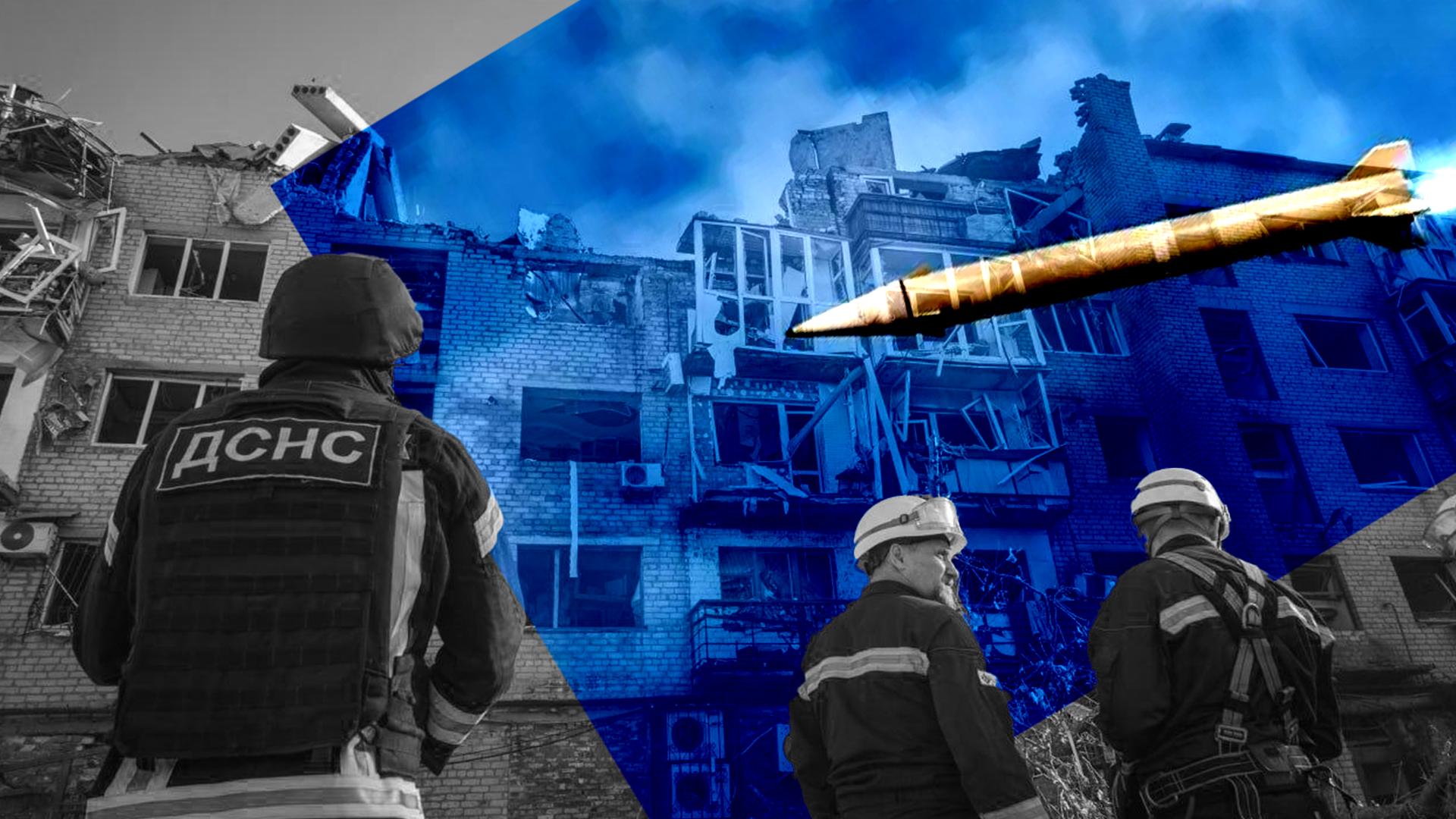
By waiting for firefighters, medics, and police to arrive at the site of the initial impact, the enemy deliberately launches a second strike to maximize casualties among those engaged in rescue operations. This method, previously tested on a large scale by the Kremlin during the war in Syria, constitutes a direct violation of the Geneva Conventions.
What is a “double-tap”?
The concept of the “double-tap” originally emerged in the first half of the 20th century as a small-arms firing technique involving two rapid shots in succession to ensure the elimination of a target. Over time, this term evolved into a military strategy involving the use of heavy weaponry.
In the modern context of aerial and artillery bombardments, this tactic entails deliberately striking the same location a second time after a specific interval has elapsed. The calculation assumes that, by the time of the second attack, emergency services and volunteers will already be operating at the scene. This practice was documented by human rights defenders long before the full-scale invasion of Ukraine. In particular, the “double-tap” tactic was actively employed by the Russian military during its intervention in Syria. As noted by experts from the international human rights organization PAX, Russian air forces and troops loyal to the Bashar al-Assad regime systematically utilized repeated strikes to eliminate civil defense personnel (the “Wtape Helmets”), medical staff, and hospitals. Former UN war crimes investigator Mark Garlasco emphasizes that the goal of such a strategy is not merely the destruction of infrastructure, but the maximization of casualties among those arriving to provide aid.
How is the Russian Federation employing the “double-tap” tactic in Ukraine?
The missile strike on Pokrovsk on August 7, 2023, serves as a prime example of Russia’s use of the “double-tap” tactic against civilian infrastructure during its war against Ukraine. Russian forces struck the city center using two Iskander ballistic missiles. The initial strike destroyed sections of a multi-story residential building and damaged neighboring homes, a hotel, and shops, leaving dozens of civilians trapped beneath the rubble. The second strike occurred approximately 40 minutes later—precisely as a large-scale rescue operation was unfolding around the blast’s epicenter. Police officers were already on the scene coordinating evacuations, State Emergency Service (SES) rescuers were clearing debris, and municipal utility crews were at work. The deliberate pause observed by the enemy resulted in a significant increase in casualties, specifically among those who had arrived to render aid. The attack claimed the lives of nine people and left another 82 injured with varying degrees of severity. Among the deceased were five civilians, a police officer, and a rescuer—Colonel Andriy Omelchenko, Deputy Head of the SES in the Donetsk region. The injured included 29 police officers, seven rescuers, and two children.
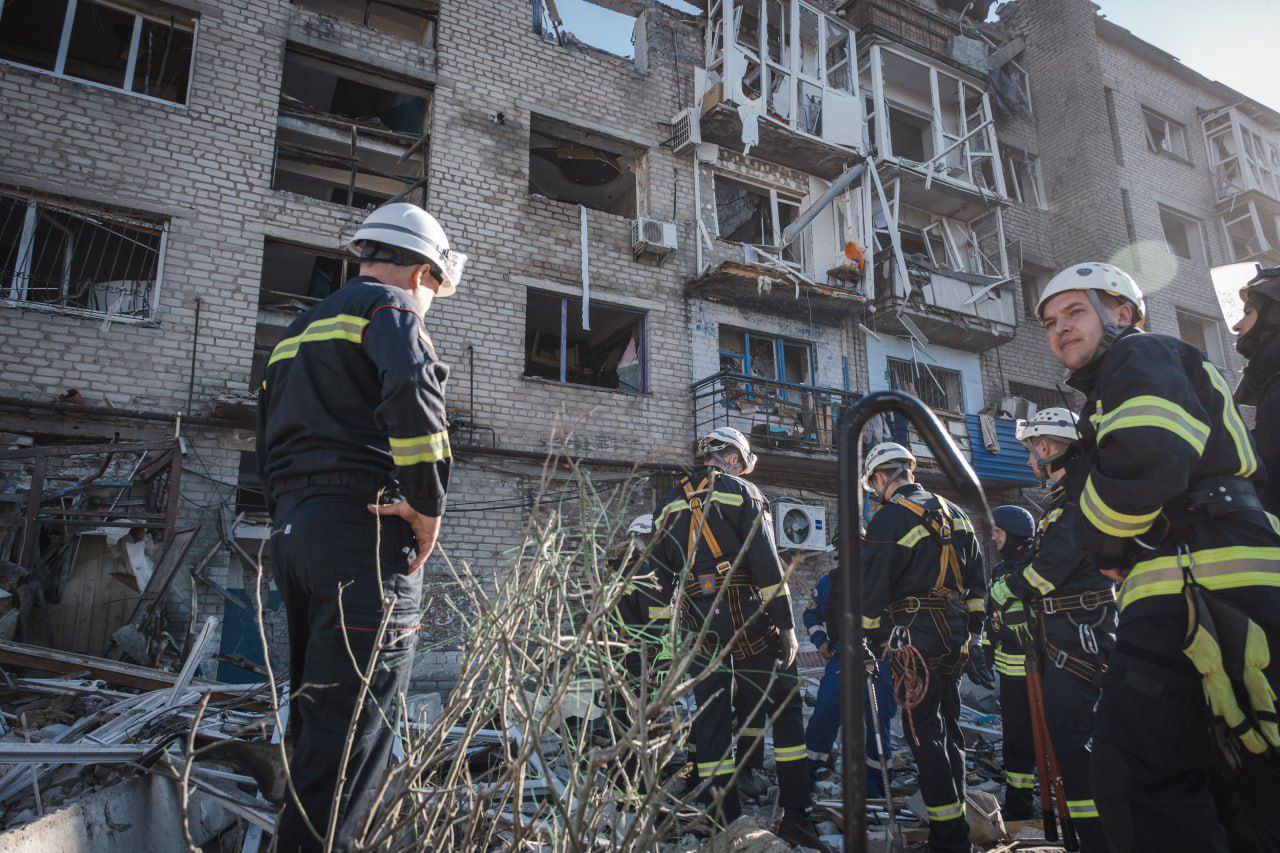
On March 15, 2024, Russian forces attacked civilian infrastructure in Odesa using Iskander-M missiles. Just as the first ambulance crews and SES fire brigades arrived at the scene of the tragedy following the initial strike—to clear debris and extinguish the blaze—the enemy launched a second missile targeting the same coordinates. As a result, 21 people were killed, and more than 70 were injured. Among the deceased were an ambulance paramedic and a State Emergency Service (SES) rescuer. Also killed during this secondary strike were former Deputy Mayor of Odesa Serhiy Tetyukhin and Oleksandr Hostishchev, commander of the “Tsunami” Special Forces Battalion, both of whom had arrived at the scene to coordinate aid for the victims.
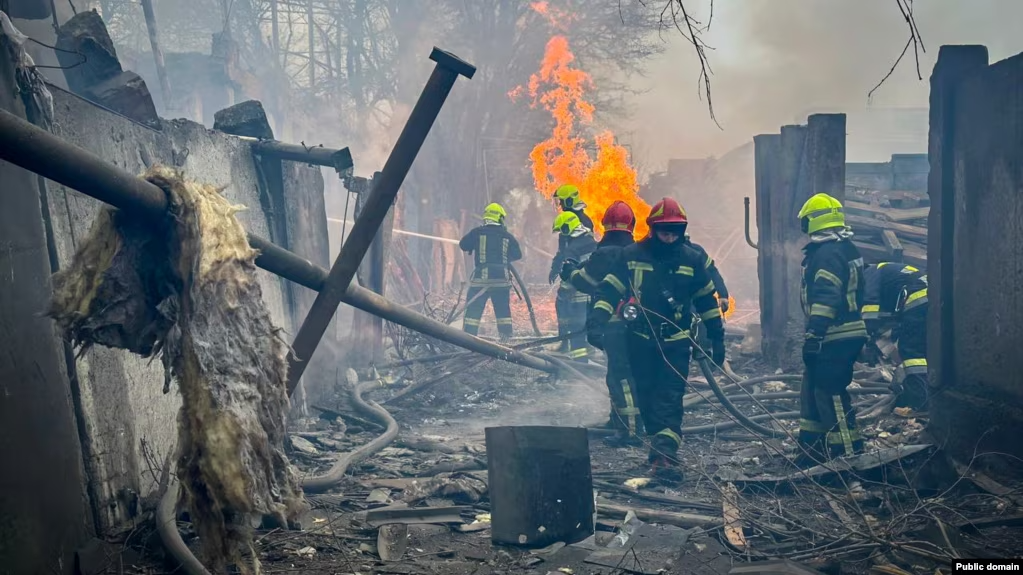
In September 2025, “Suspilne Chernihiv” reported several incidents of secondary attacks targeting rescuers in Nizhyn and Bakhmach. During an attack on an infrastructure facility in Bakhmach on September 20, 2025, firefighters managed to work at the scorched site for only 10 to 15 minutes. Watch commander Dmytro recalls hearing the sound of a “Shahed” drone and having just enough time to drop to the ground. The blast wave and shrapnel injured two rescuers. A week earlier—on September 14, 2025—a similar incident occurred in Nizhyn on the grounds of a destroyed industrial facility. Firefighters waited out the initial explosions in a shelter before emerging to extinguish the blaze; however, just as their work was nearing completion and the crew was rolling up their hoses, Russia launched two drones in quick succession. The regional branch of the SES emphasizes that the Russians act deliberately, as their reconnaissance drones provide them with a clear view of the red fire trucks and the uniformed personnel. Due to these treacherous tactics, rescuers have completely overhauled their operational protocols and now begin fighting fires only after confirming that there is no longer any threat of a secondary strike.
In 2024, the organization Truth Hounds reported that since the start of the full-scale invasion, Russia had carried out at least 36 confirmed “double-tap” strikes against Ukraine. Researchers included only cases in which the attack location, the time interval between strikes, and the arrival of first responders could be verified. Emergency responders were the most frequent victims of such attacks: in at least 20 of the 36 cases analyzed, State Emergency Service (SES) personnel were injured or killed.
According to the Prosecutor General’s Office, 34 criminal proceedings have been registered regarding attacks on emergency service personnel while performing their duties in combat zones or responding to the aftermath of drone strikes. Of these, nine cases involve attacks on SES personnel, and 25 involve attacks on medical workers. Prosecutor’s Office data indicates that 52 medical workers were injured—three of them fatally—as a result of such double-tap drone strikes; 20 SES personnel were also injured.
“This may indicate the deliberate targeting of those who save lives and deal with the aftermath of shelling,” the Prosecutor General’s Office stated.
What does international law say about double-tap strikes?
Under international humanitarian law, repeated strikes can be classified as war crimes if they target civilians, the wounded, or individuals who have arrived at the scene of an initial attack to assist. Specifically, Common Article 3 of the 1949 Geneva Conventions prohibits violence against persons not taking an active part in hostilities, as well as against those placed hors de combat due to injury, illness, or other circumstances. For this reason, a second strike on a site that has already been shelled—where medics or rescue workers are operating or where the wounded are present—may indicate not merely a continuation of the attack, but a distinct violation of the laws and customs of war.
The principles of distinction and proportionality require the attacking party to distinguish between military and civilian targets clearly and to refrain from strikes if the collateral damage to the civilian population outweighs the potential military advantage. Since the interval between attacks typically allows emergency services to be detected by aerial reconnaissance, a repeated strike provides direct evidence of the intentional targeting of protected persons.
The International Committee of the Red Cross notes that civil protection services enjoy special immunity during wartime. Their work consists exclusively of humanitarian tasks: firefighting, evacuation, debris clearance, and medical aid. While performing their duties, these individuals are inviolable. This protection extends not only to the rescue workers and medics themselves but also to their equipment and infrastructure. Any deliberate strike on a fire truck, ambulance, or State Emergency Service facility constitutes a gross violation of international norms.
