The Russian strike on the Kyiv-Pechersk Lavra
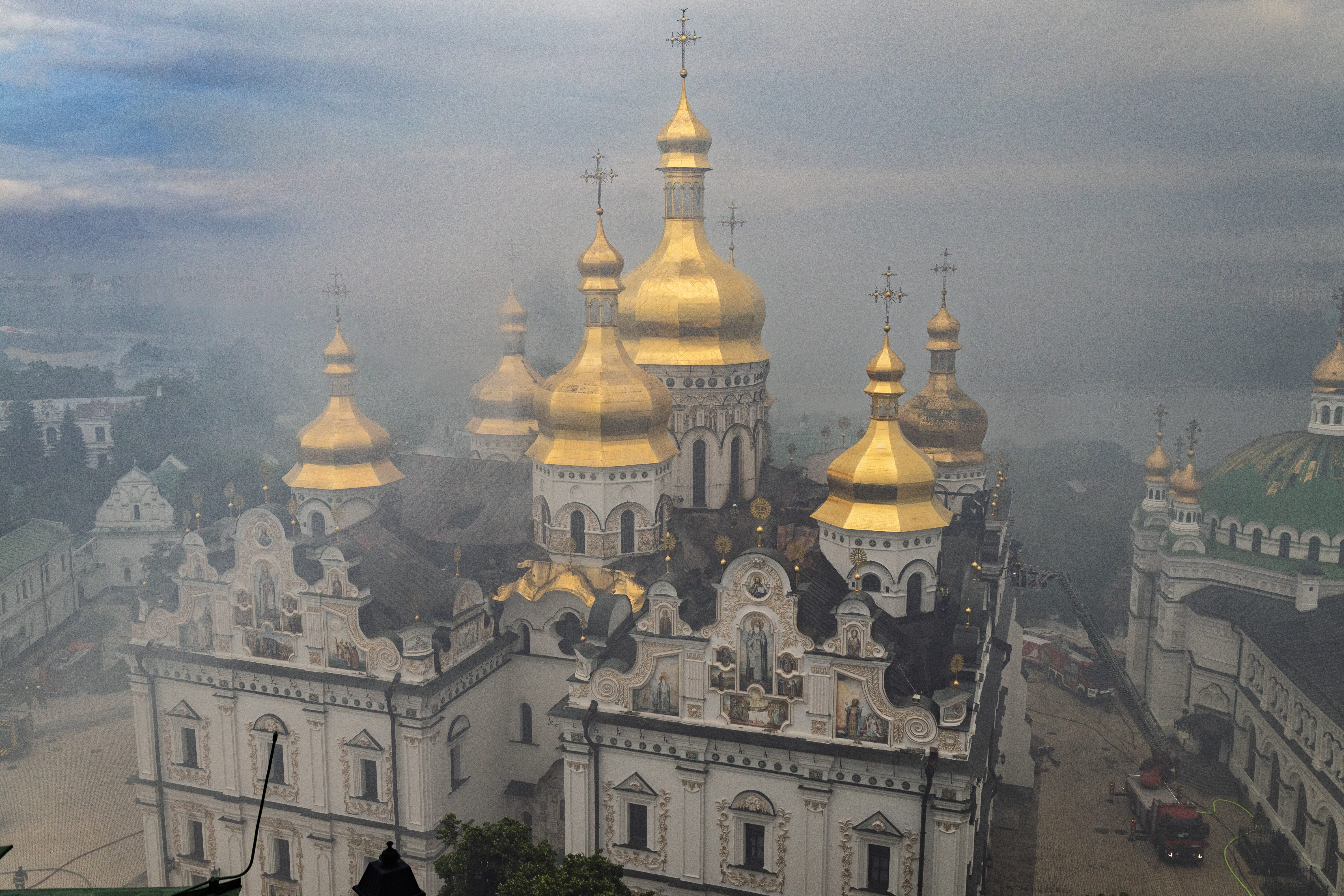
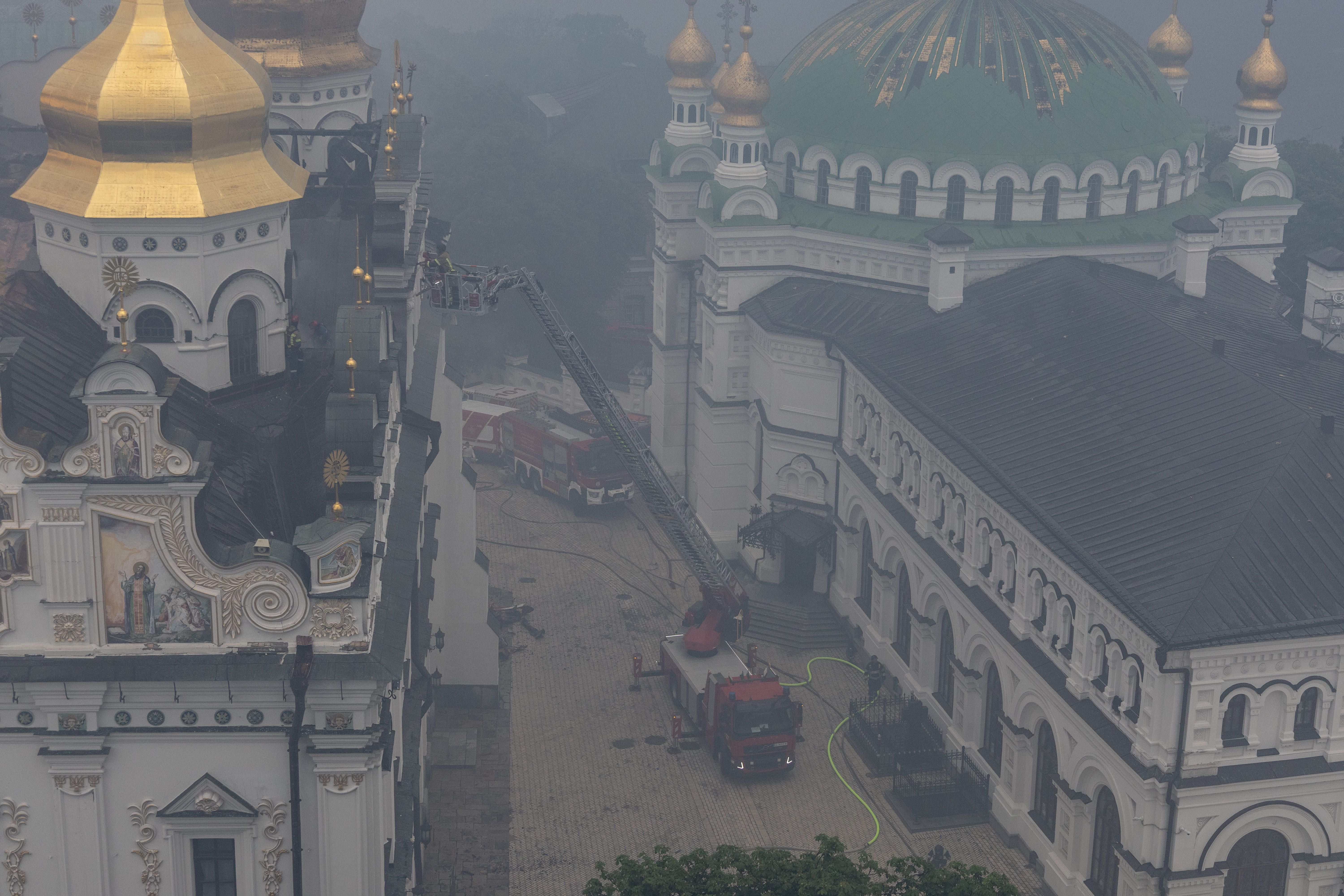
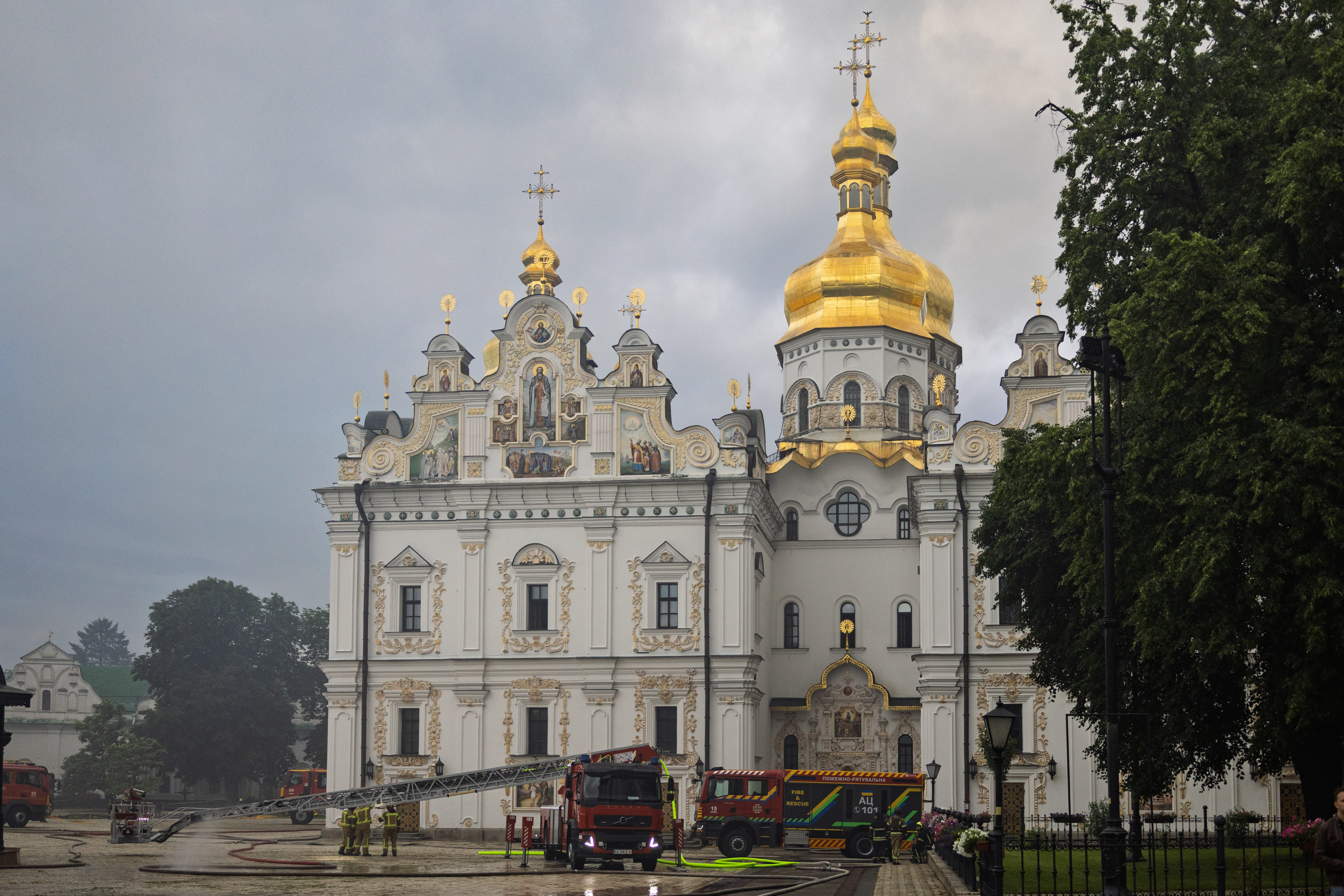
On the night of June 15, Russian forces launched another massive strike on Kyiv. Two historical landmarks were hit: the Dormition Cathedral of the Kyiv-Pechersk Lavra and the Mystetskyi Arsenal building, located directly opposite the holy site.
Within minutes of the attack on the Lavra, Russian propaganda began spreading a series of false claims—some of which even contradicted one another. Telegram channels and prominent Russian “Z-speakers” circulated stories alleging that Ukrainian MIM-104 Patriot air defense missiles had struck the cultural sites, as well as accusations that Ukrainian authorities had orchestrated a controlled demolition or arson attack on the cathedral.
NV journalist Serhii Okunev saw the burning Dormition Cathedral early that morning and narrowly escaped a follow-up strike on the Lavra itself. His footage directly refutes Russian claims regarding air defense missiles or controlled demolitions. We publish an account of the events of that night and morning by Okunev — exclusively for the KHPG:
“Overall, the shelling on the night of June 15 differed little from previous attacks. News of a massive attack being prepared had already emerged by evening, so several colleagues and I met at a metro station to coordinate our actions. Mindful of the Russian tactic of follow-up strikes, we did not rush to the impact sites, even after receiving information about hits. Later, I encountered another example of Russian propaganda: fake, AI-generated images were circulating on social media, claiming that Ukrainian journalists had arrived at the Lavra hours before the strike to set up a shoot. Any Kyiv resident could see it was a cheap fake: the generated image placed the Lavra in the middle of a residential district, and the location where the journalists were supposedly preparing for a staged shoot does not exist. It was clearly a fake. Generally, we learn about the locations of Russian attacks—just as all the capital’s residents do—from open sources and information shared among colleagues. We follow a safety protocol to ensure that publishing photos or videos does not create a risk of follow-up strikes. These measures were in place on the night of June 15 as well.”
My colleagues and I learned about the strike on the Lavra just as everyone else did—through posts on social media and news channels. We began heading toward the Arsenalna metro station. However, on the way, we also recorded an impact—either from a drone or its debris—at a market near the Shuliavska metro station. A massive fire was still raging there; State Emergency Service (SES) rescuers were battling the flames despite the risk of follow-up strikes. Our route to the Lavra took us along Parkova Street. The main wave of the shelling had already passed by then—the events were unfolding at around four in the morning. That was when we heard another drone approaching from the Left Bank, heading straight toward the Kyiv-Pechersk Lavra. The drone was shot down over the Dnipro River right before our eyes. We cannot know for certain, but it is possible that this UAV was also targeting the Lavra but failed to reach its objective.
Upon arrival, we left our car near the gates of the Mystetskyi Arsenal on Lavrska Street. One of our colleagues immediately headed toward the Dormition Cathedral via the central gates, while another colleague and I walked toward the monument to Nestor the Chronicler. Just minutes after reaching Tsytadelna Street, we heard an approaching UAV. SES [State Emergency Service of Ukraine] personnel, who were present in large numbers around the Lavra, also began issuing warnings about the aerial threat.
At first, we ran toward the car but realized we wouldn’t make it in time because the drone was too close. We found the nearest spot offering cover—the porch of the Church of Venerable Agapitus of the Caves. Seconds after taking shelter on the porch, we not only heard but also saw a Shahed-136 UAV moving toward the bell tower of the Kyiv-Pechersk Lavra. My colleague began recording video from the church porch. A colleague of ours, who was trying to take cover near the Dormition Cathedral at the time and saw the drone flying straight toward him, also confirms that it was heading specifically for the Lavra.
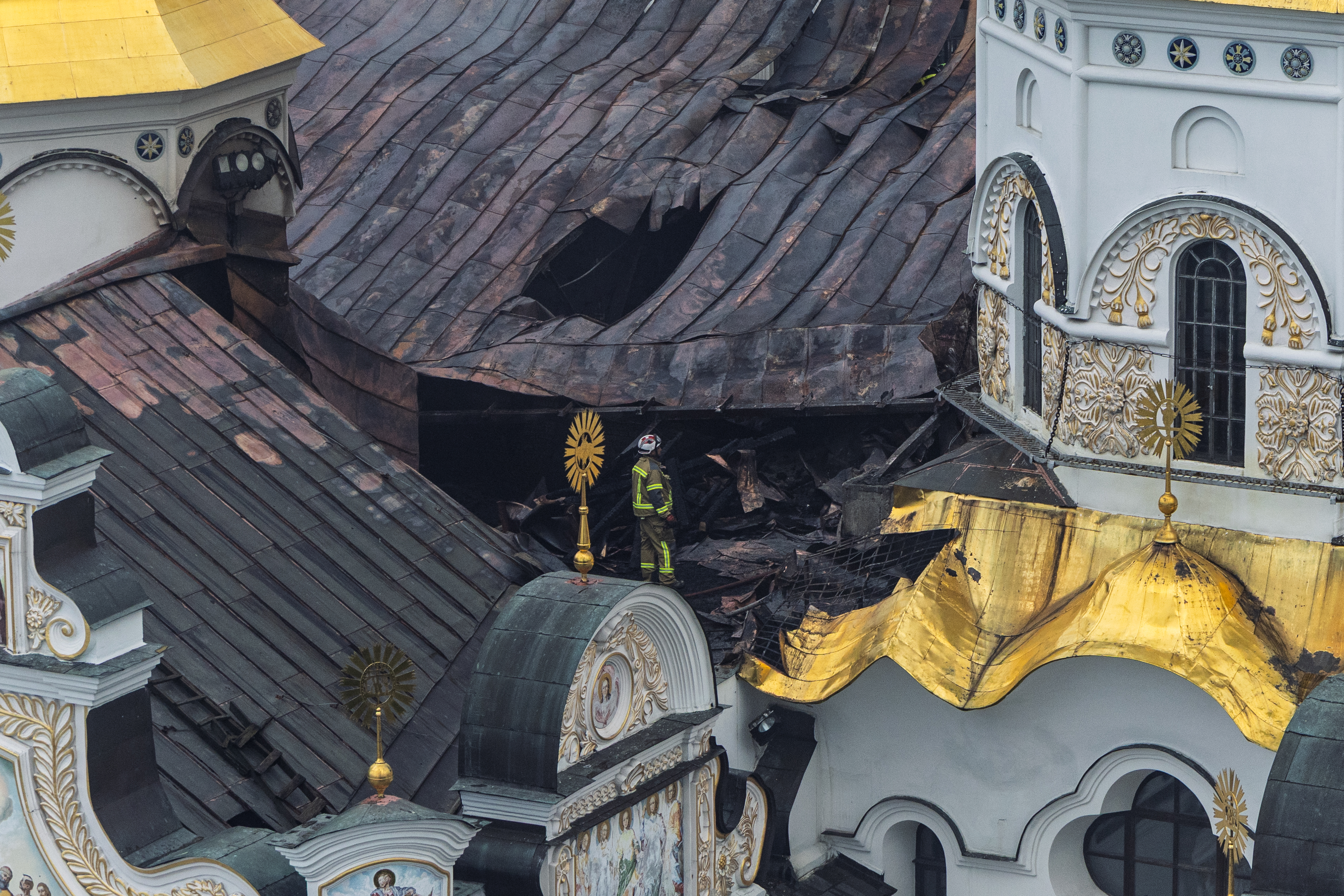
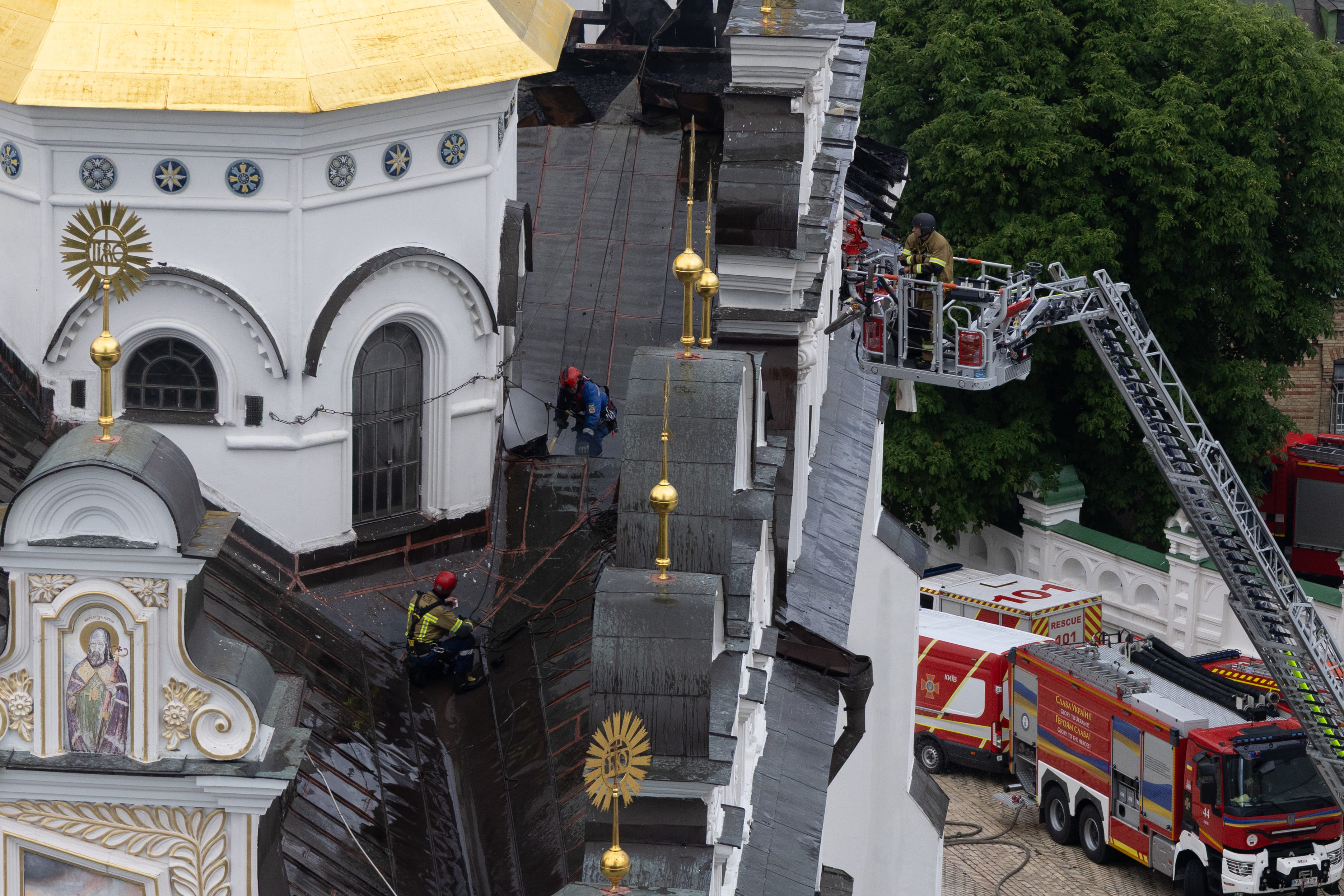
Just as the drone was directly overhead, its sound changed: it began its attack run, a steep dive. At the very last moment, the drone struck the Tower of John the Hut-Dweller, knocking off the cross and significantly altering its trajectory due to the impact. After the collision, the drone veered off course, and an explosion occurred. Our colleague captured this moment on video. I was less than 30 meters away from the point of impact and saw everything with my own eyes.
Throughout these events, I did not hear a single gunshot; the drone’s engine sounded completely normal. It was making its attack run but changed course upon colliding with the tower. That is how it ended up striking the corner of the Mystetskyi Arsenal building.
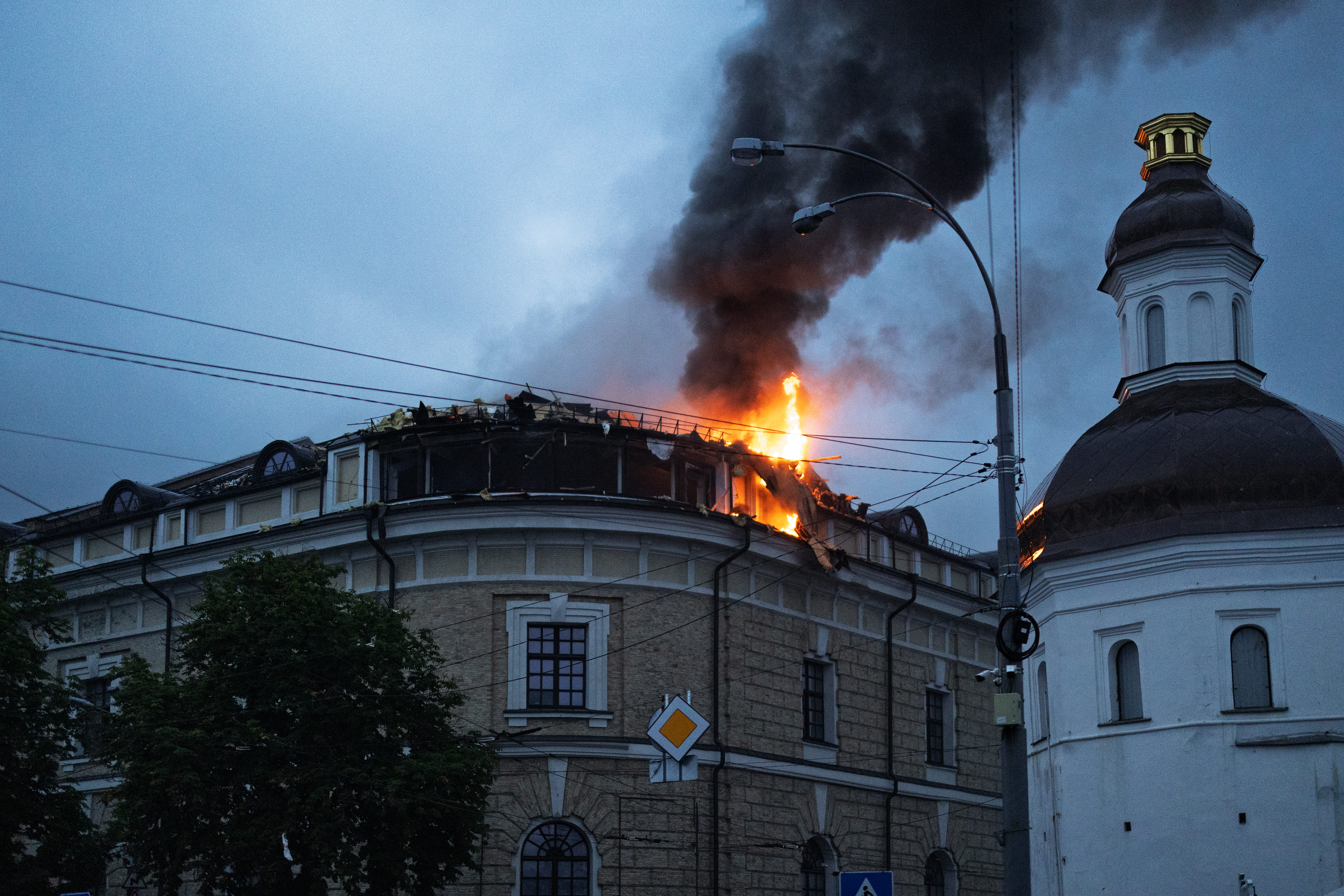
Claims by Russian propaganda that Ukrainian air defense installations were hit do not stand up to scrutiny. The second impact occurred right before my eyes; it is impossible to confuse a Shahed drone with an air defense missile. Furthermore, immediately after the strike, I filmed wreckage that quite obviously belonged to a drone, not a defense missile.
Over the next few hours, I continued my journalistic work around the Dormition Cathedral and the Kyiv-Pechersk Lavra complex. Small pieces of the Shahed wreckage were also visible near the cathedral. All the eyewitnesses I spoke to—from monks to ordinary residents of nearby buildings—unanimously stated that a drone had struck the cathedral building. This fact is corroborated by the highly distinctive sound of the Shahed’s engine, which cannot be mistaken for the sound of an air defense missile. Later, State Emergency Service personnel recovered large fragments of the UAV, including its engine, which was found on the roof of the Dormition Cathedral.
Overall, the subsequent attempts by Russian propaganda to justify these events follow the “old school” of Russian lying. Just as with the atrocities in Bucha, propagandists simultaneously concoct and disseminate a multitude of different—often opposed—narratives to generate as much information noise as possible. Recall Bucha: “There were no bodies; there is a video showing that the people who allegedly died in Bucha were actors,” and simultaneously, “those who died in Bucha were victims of Ukrainian Nazis.” Plus dozens of other versions that contradict one another. The situation regarding the Lavra is similar: “it was a hit by a Ukrainian air defense missile,” and simultaneously, “Ukrainian Nazis themselves set fire to the cathedral beforehand and sent journalists there before the strike.”
In my view, there were no mysteries surrounding this attack. The Russians deliberately targeted the Lavra grounds with at least two drones—though there could well have been more, given that some might have been shot down much earlier, even outside Kyiv. All claims regarding air defense missiles and other conspiracy theories are backed by absolutely no evidence whatsoever—not even of a superficial or circumstantial nature.
