How Russia is killing Ukrainian children
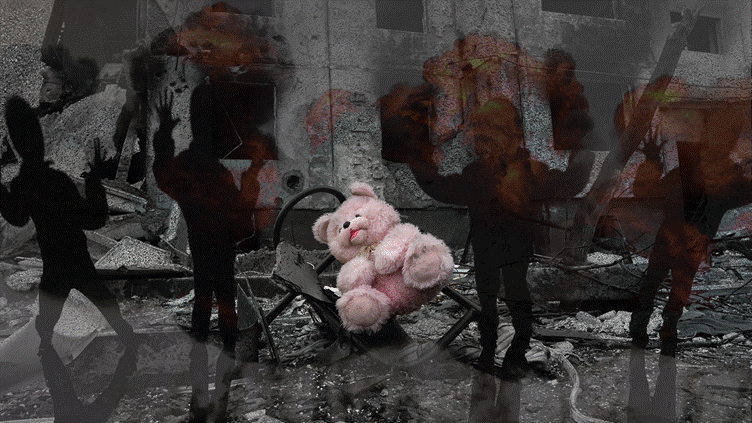
As of May 25, 2026, the full-scale war in Ukraine has claimed the lives of 705 children, and another 2,527 have been injured. Such official data is provided by the state portal “Children of War”. However, these figures reflect only verified cases. The real number of victims may be much higher, since collecting information in active combat zones and temporarily occupied territories is currently impossible.
UNICEF also draws attention to the fact that children in Ukraine remain one of the most vulnerable groups during the war. According to the organization, in the last year alone, the number of children affected has increased by 10% compared to 2024. This is the third consecutive year that UN-confirmed child casualties in Ukraine have increased.
April 8, 2022 — Kramatorsk
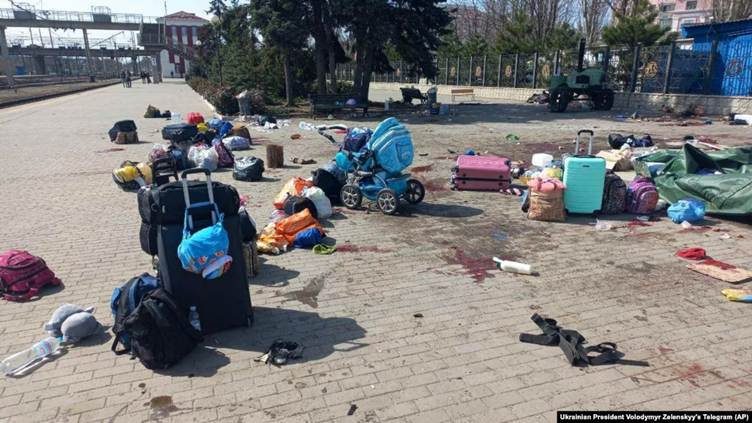
That morning, about four thousand civilians were at the Kramatorsk train station waiting to be evacuated. Among them were many families with children trying to leave the Donetsk region for safer regions of Ukraine. Russian forces hit the station with a Tochka-U missile equipped with cluster munitions just as people were waiting for evacuation trains. The attack killed 61 people, including 9 children. Another 121 people were injured.
Russia, as in many other cases of attacks on civilians, denied involvement. The Russian Defense Ministry claimed that Russian forces were not using Tochka-U missiles, and later shifted responsibility to Ukraine, calling the attack a “provocation.” However, Human Rights Watch’s investigation found no evidence to support these claims and concluded that the missile attack was carried out from the occupied part of Donetsk Oblast.
July 14, 2022 — Vinnytsia
The Russian army struck the center of Vinnytsia with Caliber missiles during the day. The attack killed 27 people, including three children.
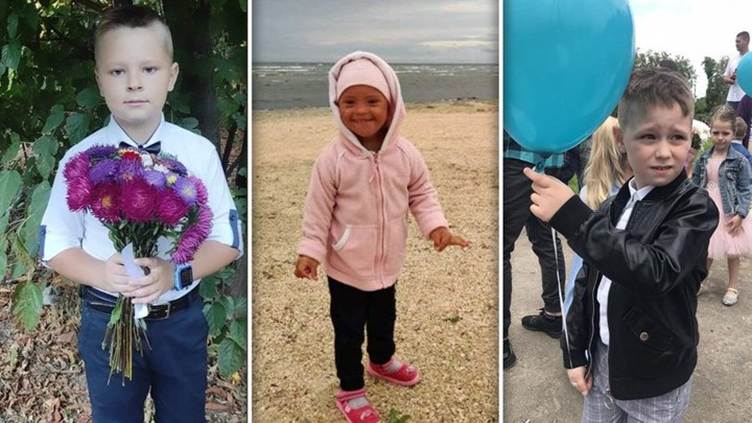
One of the dead children was four-year-old Liza Dmitrieva, who, along with her mother Irina, was returning from speech therapy classes. A photo of her overturned, bloodied pink wheelchair, published after the attack, was widely circulated in the world media. Seven-year-old Maksym Zhariy had come from a regional town with his mother, Victoria, for a check-up and was inside a medical center that burned down. They died together. Eight-year-old Kyrylo Pʼyakhin, along with his family, had recently evacuated to Vinnytsia from the occupied Kherson region, seeking safety. At the time of the explosion, he was waiting for his uncle in a parked car, which instantly caught fire, trapping the child in the fire.
After the terrorist attack, the Russian leadership and propaganda changed their versions several times, trying to justify the attack. At first, the Kremlin announced the “destruction of a nationalist base,” later about an alleged “meeting of the Ukrainian Air Force command with foreign arms suppliers,” while continuing to deny any targeted strikes on civilians. Ukraine officially qualified the strike on Vinnytsia as another Russian war crime against humanity.
June 27, 2023 — Kramatorsk
On the evening of June 27, 2023, on the eve of the Constitution Day of Ukraine, Russian troops launched a missile strike on the center of Kramatorsk in the Donetsk region, firing an Iskander missile. The target was the popular Ria Pizza pizzeria in the city, where many visitors were at the time. A powerful explosion destroyed the establishment’s building. As a result of this attack, 13 people died, and more than 60 were injured to varying degrees.
Three children were among the dead. The Russian missile took the lives of 14-year-old twin sisters Yulia and Anna Aksenchenko. They had graduated from eighth grade and were supposed to celebrate their 15th birthday in the summer. A 17-year-old girl who worked at the establishment also died from her injuries.
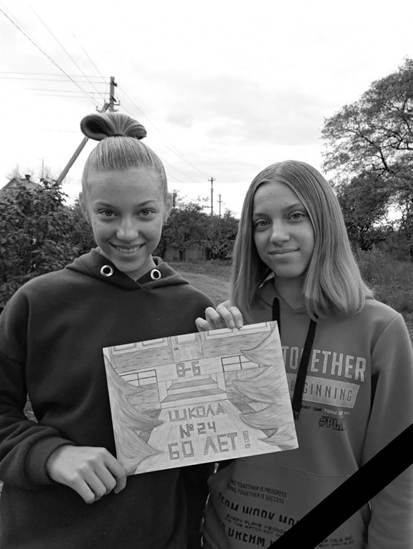
The Security Service of Ukraine promptly detained a correctional officer — a resident, who, on the instructions of Russian military intelligence, filmed the institution and transport in the parking lot near it, sending the video to the curators immediately before the strike. The Russian Ministry of Defense traditionally tried to justify the terrorist attack, stating the alleged “destruction of the temporary deployment point of the command staff of the Armed Forces of Ukraine”.
January 14, 2023 — Dnipro
On Saturday, a weekend, at about 15:40, the Russian army struck the Dnieper River by launching a supersonic anti-ship missile Kh-22. The missile with a warhead weighing under a ton hit right in the center of the building, destroying two entrances and turning dozens of apartments into ruins.
This terrorist attack claimed the lives of 46 people, including six children. The youngest victim was 11-month-old Mykyta Zelensky, who lost his life along with his father, Oleksiy. His mother, Kateryna, was miraculously pulled out alive by rescuers after 20 hours under the rubble. The Russian missile also killed 1.5-year-old Makar Guzy, who died along with his parents, Anastasia and Dmytro. Two sisters, 13-year-old Leyla and 3-year-old Mikhailina Frantsev, died under the rubble on the fifth floor of the building. 15-year-old Maria Lebid and 17-year-old Maksym Bogutsky were also victims of this brutal attack.
On January 16, 2023, the SBU reported that service members of the 52nd Guards Heavy Bomber Aviation Regiment of the Russian Federation may have been involved in the missile strike on a residential building in Dnipro. On January 24, the Prosecutor General’s Office reported the suspicion to the commander of this air regiment.
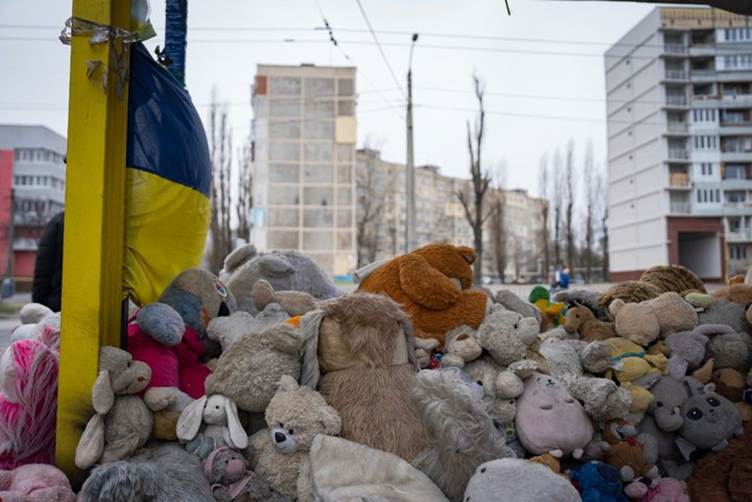
March 2, 2024 — Odesa
At night, a Russian “Shahed” attack drone hit a residential high-rise building in Odessa. A powerful explosion destroyed one of the building’s entrances, collapsing 18 apartments. The rescue operation lasted almost two days. In the end, it became known that 12 people died, among whom were five children.
Three-year-old Mark Pogozhin and his father, Vitaly, four-month-old Timofiy Gaidarzhi and his mother Anna died as a result of the hit. In addition, the attack killed almost the entire Kravets family: the couple, Tetyana and Oleg, died, as well as their children — seven-month-old Liza, eight-year-old Zlata, and nine-year-old Serhiy.
A memorial to the dead was set up near the house. From the first days of the tragedy, people brought toys and flowers to it.
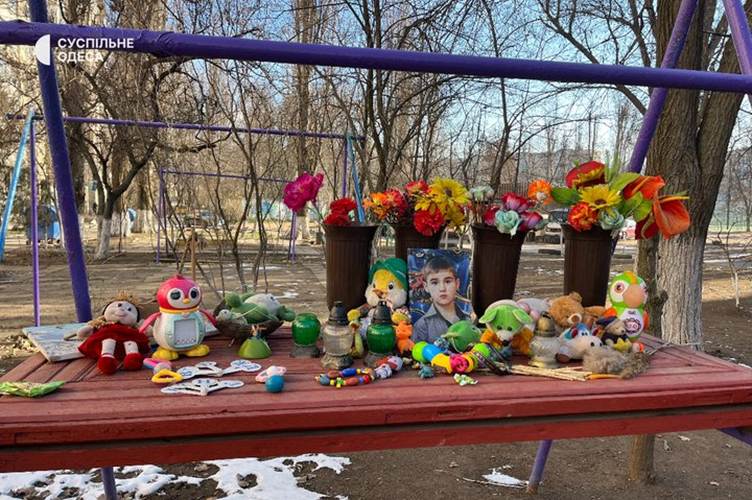
April 4, 2025 — Kryvyi Rih
On the evening of April 4, the Russian army struck a densely populated residential neighborhood of Kryvyi Rih with a ballistic missile. The epicenter of the attack was a playground where children were playing at the time, and nearby were high-rise buildings, shops, and other civilian facilities. The strike killed 20 people, including nine children. The youngest, Timofey, was only 3 years old. Also killed were 7-year-old Arina and Radyslav, 9-year-old German, 15-year-old Alina, Danylo, and Mykyta, 16-year-old Konstantin, and 17-year-old Mykyta. More than 70 other citizens were injured.
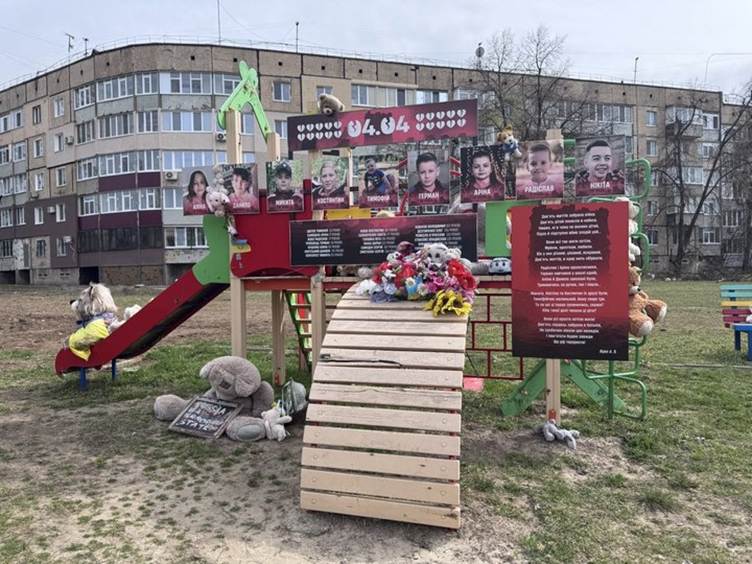
During the attack, Russia used cluster munitions. This type of weapon is especially dangerous in densely built-up areas, as it can hit people over a large area. Although the strike hit a residential area, Russia claimed after the attack that it had allegedly hit a “military gathering” in a restaurant.
The UN Human Rights Monitoring Mission in Ukraine later noted that April 2025 was the deadliest month for civilians since September 2024: at least 209 civilians were killed, and 1,146 were injured. Among the dead were 19 children. This is the highest monthly figure since June 2022, according to the UN Human Rights Monitoring Mission in Ukraine’s report.
May 14, 2026 — Kyiv
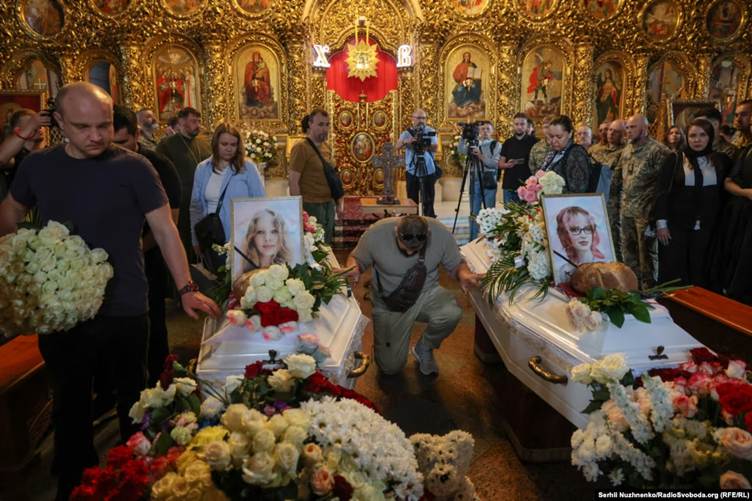
On the night of May 14, the Russian army hit a high-rise building in the Darnytskyi district of Kyiv with a missile. The attack killed 24 people, including three children — girls aged 12, 15, and 17.
One of the dead was 15-year-old Maria Polska, a 9th-grade graduate of Kyiv Lyceum No. 237. Along with her, the Russian missile took the lives of her father and grandmother. Also, the strike killed the daughters of the fallen Ukrainian military, 12-year-old Lyubava and her older sister Vira. Lyubava was in the 6th grade of the capital’s Lyceum No. 323, and Vira was a student at the Kyiv National University of Technology and Design.